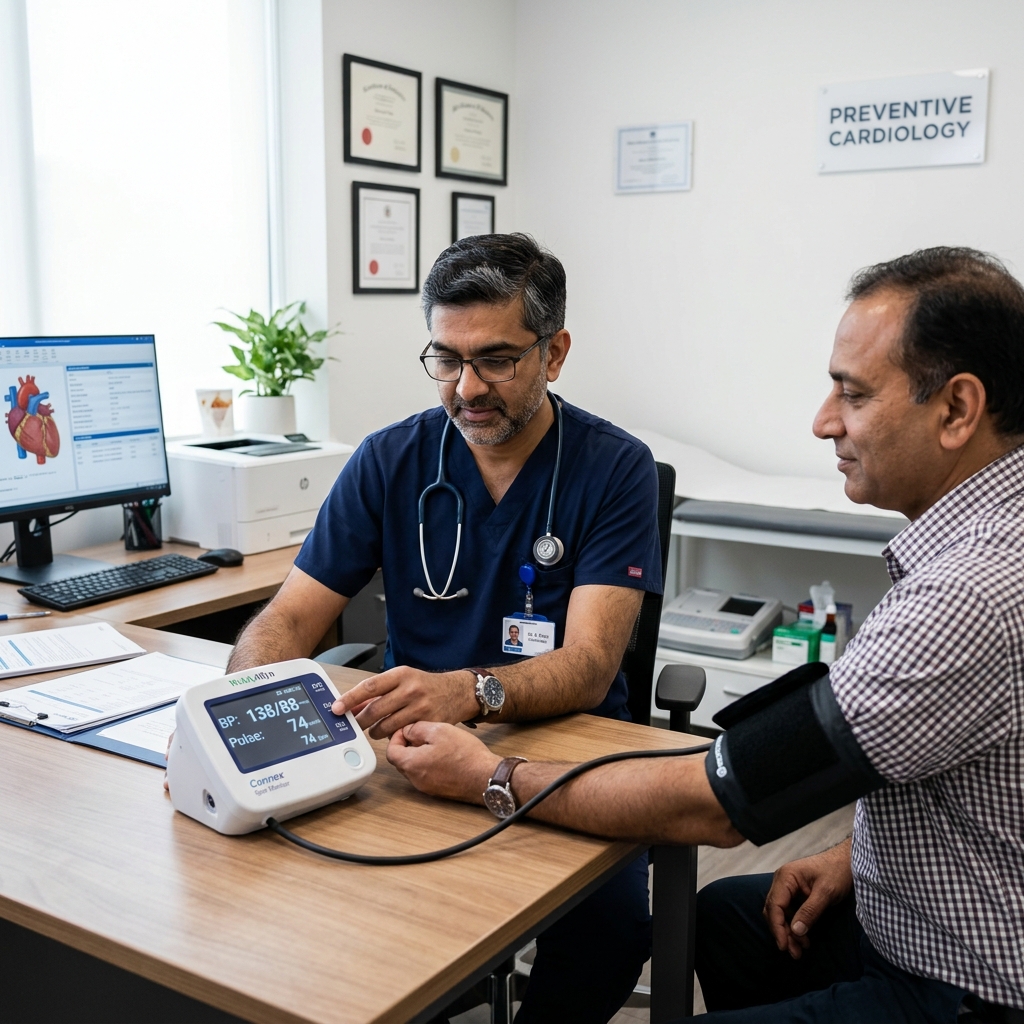
Essential Hypertension
Hypertension affects approximately 1 in 3 adults in India and is the single most important preventable risk factor for stroke, heart attack, and kidney failure. Known as the 'silent killer', systematic diagnostic confirmation is crucial.
Why Hypertension Must Be Controlled
Elevated pressures injure blood vessel lining, accelerate coronary stenosis, and trigger left ventricular remodelling.
Hypertension is office BP ≥140/90 mmHg or 24-hour ABPM average ≥130/80 mmHg. Mechanical overload on the arterial walls silently damages target organs, doubling the risk of cardiovascular death for every 20 mmHg rise above normal.
Causes & Risk Factors for Hypertension
Multiple genetic, environmental, and lifestyle factors contribute to sustained blood pressure elevation.
Genetic Predisposition
Family history of hypertension significantly increases individual risk. Multiple genetic variants each contribute small effects on BP regulation.
Dietary Factors
High sodium intake is the most important dietary driver. Excess alcohol, low potassium, and high saturated fat also contribute. The DASH diet reduces systolic BP by up to 11 mmHg.
Obesity & Physical Inactivity
Excess body weight increases cardiac output and systemic vascular resistance. Each 10 kg weight loss reduces systolic BP by approximately 10 mmHg.
Age & Arterial Stiffening
Arterial compliance decreases with age, raising systolic pressure. Isolated systolic hypertension is the most common form in patients over 60.
Secondary Causes
Renal artery stenosis, primary hyperaldosteronism, sleep apnoea, and thyroid disease can cause resistant or secondary hypertension requiring targeted treatment.
Stress & Autonomic Dysregulation
Chronic sympathetic overdrive raises BP through increased heart rate and vascular tone. Stress management is an important adjunctive therapy.
Standard ESC/ESH Blood Pressure Tiers
We stratify blood pressures to make precise medication recommendations and determine lifestyle intensity.
| Grade Class | Blood Pressure (mmHg) | Clinical Action |
|---|---|---|
| Optimal | <120/80 | Target for most treated patients |
| Normal | 120–129 / <80 | No treatment needed; monitor annually |
| High Normal | 130–139 / 85–89 | Lifestyle; treat if diabetic or CKD |
| Grade 1 HTN | 140–159 / 90–99 | Lifestyle ± medication by risk |
| Grade 2 HTN | 160–179 / 100–109 | Medication + lifestyle |
| Grade 3 HTN | ≥180 / ≥110 | Immediate treatment; urgent review |
Signs & Symptoms of Hypertension
Hypertension is called the 'silent killer' because most patients have no symptoms until target organ damage occurs.
Silent Progression
Most patients have no symptoms — even with severely elevated BP. Damage accumulates silently for years before a heart attack, stroke, or heart failure occurs.
Morning Headache
When symptoms do appear, they may include morning headache, usually occipital, due to elevated intracranial pressure from severe hypertension.
Visual Disturbance
Blurred vision or scotomata can indicate hypertensive retinopathy — retinal arteriolar narrowing, AV nicking, or cotton-wool spots.
Nosebleeds (Epistaxis)
While commonly associated with hypertension, nosebleeds are an unreliable symptom — most patients with epistaxis have normal BP.
Shortness of Breath
Exertional dyspnoea may develop from hypertensive heart disease — LVH leading to diastolic dysfunction and elevated filling pressures.
Palpitations
Hypertension is the strongest risk factor for atrial fibrillation. Hypertensive LVH and LA dilation create the electrophysiological substrate for AF.
How Is Hypertension Diagnosed?
Systematic blood pressure measurement and target organ assessment are essential for accurate diagnosis.
Office Blood Pressure Measurement
BP measured with a validated device after 5 minutes rest. Three readings taken 1–2 minutes apart. Diagnosis requires elevated readings on at least two separate occasions.
Ambulatory BP Monitoring (ABPM)
24-hour automated BP recording during daily activities and sleep. ABPM confirms diagnosis and identifies white-coat or masked hypertension. 24-hour average ≥130/80 mmHg confirms hypertension.
Laboratory & ECG Evaluation
Serum creatinine, eGFR, electrolytes, fasting glucose, lipid profile, urinalysis, and 12-lead ECG. These assess baseline risk and screen for secondary causes.
Target Organ Damage Assessment
2D echocardiography for LVH, fundoscopy for retinopathy, ankle-brachial index for peripheral arterial disease, and urine albumin:creatinine ratio for early kidney damage.
Secondary Hypertension Screening
If resistant or early-onset, screen for renovascular disease, hyperaldosteronism, phaeochromocytoma, and sleep apnoea. Renal artery imaging and endocrine testing are performed as indicated.
Target Organ Damage From High Blood Pressure
Chronic pressure overload results in subclinical systemic damage long before events present clinically.
Heart
Test: 2D Echo · ECGLeft ventricular hypertrophy (LVH) — the heart thickens in response to pressure overload. Leads to diastolic dysfunction (HFpEF), coronary disease, atrial fibrillation, and eventually systolic failure.
Brain
Test: Clinical history · MRIStroke (ischaemic and haemorrhagic) is the most feared consequence. Hypertension is the single most important preventable stroke risk factor.
Kidneys
Test: Creatinine · eGFR · Urine albuminHypertensive nephrosclerosis causes progressive CKD — eGFR decline and microalbuminuria are early markers.
Eyes
Test: FundoscopyHypertensive retinopathy — retinal arteriolar narrowing, AV nicking, cotton-wool spots. Grade 3–4 retinopathy indicates severe, longstanding hypertension.
Arteries
Test: Ankle-brachial index · Carotid IMTAccelerated atherosclerosis in the aorta, peripheral arteries, and carotid arteries. Increased pulse wave velocity indicates arterial stiffness.
Heart Rhythm
Test: ECG · Holter monitorHypertension is the strongest risk factor for atrial fibrillation — hypertensive LVH and LA dilation create the electrophysiological substrate.
Standard Antihypertensive Medication Options
Combination drug therapies are optimized based on renal indexes, heart rates, and comorbidities.
ACE Inhibitors (ACEi)
Ramipril, Enalapril, Perindopril. Preferred in diabetes, CKD, heart failure, and post-MI. Avoid in pregnancy.
Angiotensin Receptor Blockers (ARB)
Telmisartan, Valsartan, Losartan. Same indications as ACEi; preferred if ACEi causes dry cough. Excellent tolerability.
Calcium Channel Blockers (CCB)
Amlodipine, Felodipine. Preferred in elderly, isolated systolic HTN, and angina. Combine with ACEi/ARB as first-line pair.
Thiazide / Thiazide-like Diuretics
Indapamide, Chlorthalidone. Third agent in combination. Indapamide preferred over HCTZ due to less metabolic impact.
Beta-Blockers
Bisoprolol, Metoprolol. Useful for angina + HTN, heart failure, post-MI, and AF rate control. Not first-line for uncomplicated HTN.
Aldosterone Antagonists (MRA)
PATHWAY-2: −20 mmHg systolicSpironolactone, Eplerenone. Used for resistant hypertension. Reduces BP by 20+ mmHg (PATHWAY-2 trial). Exclude secondary causes first.
Antihypertensive Drug Classes
Six major drug classes are used alone or in combination to achieve target blood pressure.
| Drug Class | Representative Molecules | Preferred Indications |
|---|---|---|
| ACE Inhibitor (ACEi) | Ramipril, Enalapril, Perindopril | Diabetes, CKD, Heart failure, Post-MI. Avoid in pregnancy. |
| Angiotensin Receptor Blocker (ARB) | Telmisartan, Valsartan, Losartan | Same as ACEi; preferred if ACEi causes dry cough (common in Indians). Excellent tolerability. |
| Calcium Channel Blocker (CCB) | Amlodipine, Felodipine | Elderly, isolated systolic HTN, angina. Combine with ACEi/ARB as first-line pair. |
| Thiazide / Thiazide-like | Indapamide, Chlorthalidone | Third agent in combination. Indapamide preferred over HCTZ — less metabolic impact. |
| Beta-Blocker | Bisoprolol, Metoprolol | Angina + HTN; heart failure with HTN; post-MI; AF rate control. Not first-line for uncomplicated HTN. |
| Aldosterone Antagonist (MRA) | Spironolactone, Eplerenone | Resistant hypertension (BP uncontrolled on 3 agents) — reduces BP by 20+ mmHg (PATHWAY-2 trial). |
Evidence-Based Lifestyle Interventions
Non-drug modifications are additive and necessary to optimize drug responsiveness and decrease systemic risk.
Stop Smoking
Most important: −50% CV event riskSmoking causes acute BP spikes and accelerates vascular damage. Each cigarette raises BP by 20–30 mmHg acutely.
Reduce Salt Intake
Systolic BP −5 to −6 mmHgReduce to below 5g sodium per day (about 1 teaspoon of salt). Avoid processed foods, pickles, papads, and restaurant food.
Regular Aerobic Exercise
Systolic BP −5 to −8 mmHg150 minutes per week of moderate-intensity activity (brisk walking, swimming, cycling). Exercise is as effective as a single drug in mild HTN.
Weight Reduction
Per kg lost: −1 mmHg systolicTarget BMI below 25 kg/m². A 10 kg weight loss reduces systolic BP by approximately 10 mmHg.
DASH / Mediterranean Diet
DASH diet: −11/6 mmHg systolic/diastolicHigh in fruits, vegetables, whole grains, potassium, and low-fat dairy. Low in saturated fat, red meat, and sugar.
Limit Alcohol
Systolic BP −3 to −4 mmHgAlcohol raises BP in a dose-dependent manner above 2 units per day. Target below 14 units per week in men.
Guidelines & Latest Evidence
Current ESC/ESH and ACC/AHA guidelines inform treatment thresholds and targets.
| Guideline | Key Recommendation | Clinical Impact |
|---|---|---|
| ESC/ESH 2023 | Systolic target 120–129 mmHg for most treated patients | Individualised targets to prevent dizziness in elderly |
| ACC/AHA 2017 | Stage 1 HTN defined as ≥130/80 mmHg | Lower threshold enables earlier intervention |
| PATHWAY-2 (NEJM 2015) | Spironolactone as fourth-line in resistant HTN | Reduces systolic BP by 20–25 mmHg in resistant cases |
| SPRINT (NEJM 2015) | Intensive target <120 mmHg vs <140 mmHg | 27% reduction in all-cause mortality with intensive therapy |
| 2023 ESH Guidelines | ABPM preferred for diagnostic confirmation | Avoids overtreatment of white-coat hypertension |
When to See a Doctor
Certain BP readings and symptoms require urgent medical attention.
Severely Elevated BP (≥180/≥110 mmHg)
Hypertensive urgency or emergency requires immediate medical evaluation to prevent stroke or organ damage.
Symptoms of Hypertensive Emergency
Severe headache, visual disturbance, chest pain, shortness of breath, or neurological symptoms with elevated BP require emergency care.
Resistant Hypertension
BP remains above target despite three or more antihypertensive agents. Secondary causes must be investigated.
New or Worsening Organ Damage
LVH on echo, declining eGFR, or new proteinuria suggests progressive target organ damage requiring treatment intensification.
Frequently Asked Questions
Guideline-directed clarifications regarding silent pressures and medication safety.
01What is hypertension and what BP is considered high?
Hypertension is persistently elevated blood pressure — defined as office BP ≥140/90 mmHg on repeated measurement, or ABPM 24-hour average ≥130/80 mmHg. BP is graded: Grade 1 (140–159/90–99), Grade 2 (160–179/100–109), and Grade 3 (≥180/≥110). A single elevated reading does not confirm hypertension — repeated measurements on at least two occasions, or ABPM, are required.
02What are the symptoms of high blood pressure?
Hypertension is called the 'silent killer' because most patients have no symptoms — even with severely elevated BP. Damage accumulates silently for years before a heart attack, stroke, or heart failure occurs. When symptoms do appear, they may include morning headache, visual disturbance, or nosebleeds — but these are unreliable. The only way to detect hypertension is to measure blood pressure.
03What is white-coat hypertension?
White-coat hypertension is elevated clinic BP (≥140/90 mmHg) with normal daily-life BP on ABPM (24-hour average <130/80 mmHg). It affects ~20–30% of patients diagnosed with hypertension by clinic measurement alone. True white-coat hypertension does not require antihypertensive medication — confirming it with ABPM avoids unnecessary treatment.
04What blood pressure target should I aim for?
The 2023 ESH Guidelines recommend a systolic BP target of 120–129 mmHg for most treated hypertensive patients who can tolerate therapy. For patients aged over 65, the target is 130–139 mmHg. For CKD, the target is below 130/80 mmHg. Targets should be individualised to prevent dizziness and falls in elderly patients.
05How is blood pressure measured correctly?
Blood pressure should be measured after at least 5 minutes of quiet rest, with the patient seated comfortably and feet flat on the floor. The cuff should be at heart level on the bare upper arm, with the correct cuff size for the arm circumference. Three readings taken 1–2 minutes apart should be averaged. Caffeine, smoking, and exercise should be avoided for 30 minutes before measurement. Home BP monitoring with a validated upper-arm device is recommended for all hypertensive patients, and ABPM is the gold standard for confirming the diagnosis.
06Can hypertension be reversed without medication?
In patients with high-normal BP (130–139/85–89 mmHg) or Grade 1 hypertension without high risk features, lifestyle modification is the first-line treatment and can normalise BP without medication in some cases. The DASH diet (rich in fruits, vegetables, and low-fat dairy) reduces systolic BP by up to 11 mmHg. Weight loss of 10 kg reduces systolic BP by approximately 10 mmHg. Regular aerobic exercise (150 minutes per week), salt restriction below 5 g per day, and limiting alcohol to 2 units per day are all additive. However, most patients with Grade 2 or 3 hypertension will require lifelong medication even with optimal lifestyle changes.
07What is resistant hypertension?
Resistant hypertension is defined as BP that remains above target despite treatment with three or more antihypertensive agents of different classes at optimal doses, ideally including a diuretic. It affects approximately 10–15% of treated hypertensive patients. Causes include non-adherence to medication, suboptimal drug combinations, white-coat effect, and secondary causes such as primary hyperaldosteronism, renal artery stenosis, or obstructive sleep apnoea. The PATHWAY-2 trial demonstrated that spironolactone as a fourth-line agent reduces systolic BP by 20–25 mmHg in resistant hypertension. Evaluation includes ABPM confirmation, renal imaging, and screening for secondary causes.
08How does hypertension affect pregnancy?
Hypertension in pregnancy carries serious risks for both mother and baby. Chronic hypertension (present before pregnancy or before 20 weeks) increases the risk of pre-eclampsia, placental abruption, preterm birth, and foetal growth restriction. Gestational hypertension develops after 20 weeks and resolves after delivery. Pre-eclampsia is hypertension with proteinuria after 20 weeks — a medical emergency requiring close monitoring and often early delivery. Pregnant women with hypertension should be managed jointly by a cardiologist and obstetrician. Methyldopa, labetalol, and nifedipine are the preferred antihypertensives in pregnancy. ACE inhibitors, ARBs, and spironolactone are contraindicated.
“Advanced cardiovascular care. Restoring life, rhythm, and vitality.”

Dr. Amit Singh, FACC
Consultant Interventional Cardiologist
Cardiac Services Available at Heartwise
Dr. Amit Singh offers comprehensive cardiac diagnostics and management for this condition at Heartwise Cardiology Clinic, Vashi.
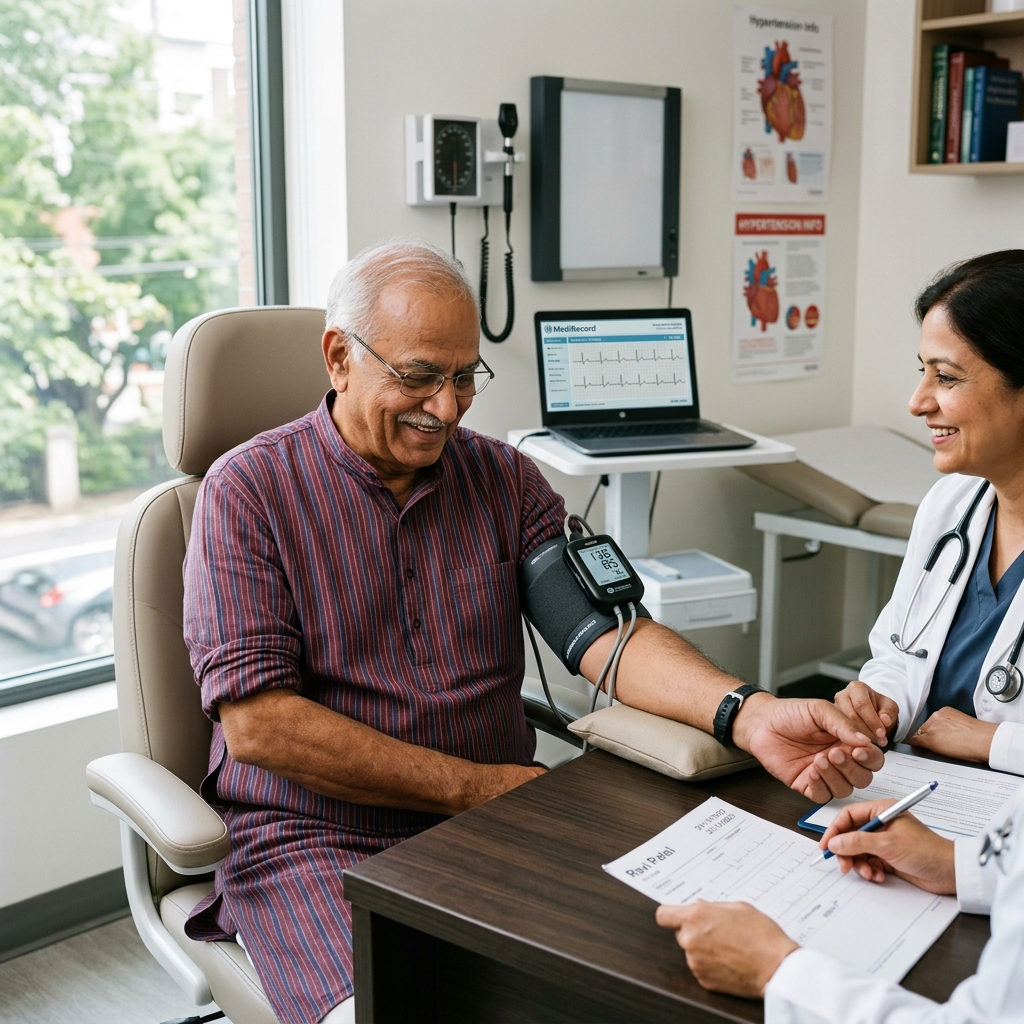
24-Hour ABPM
Gold-standard ambulatory blood pressure monitoring over 24 hours to confirm true BP levels.
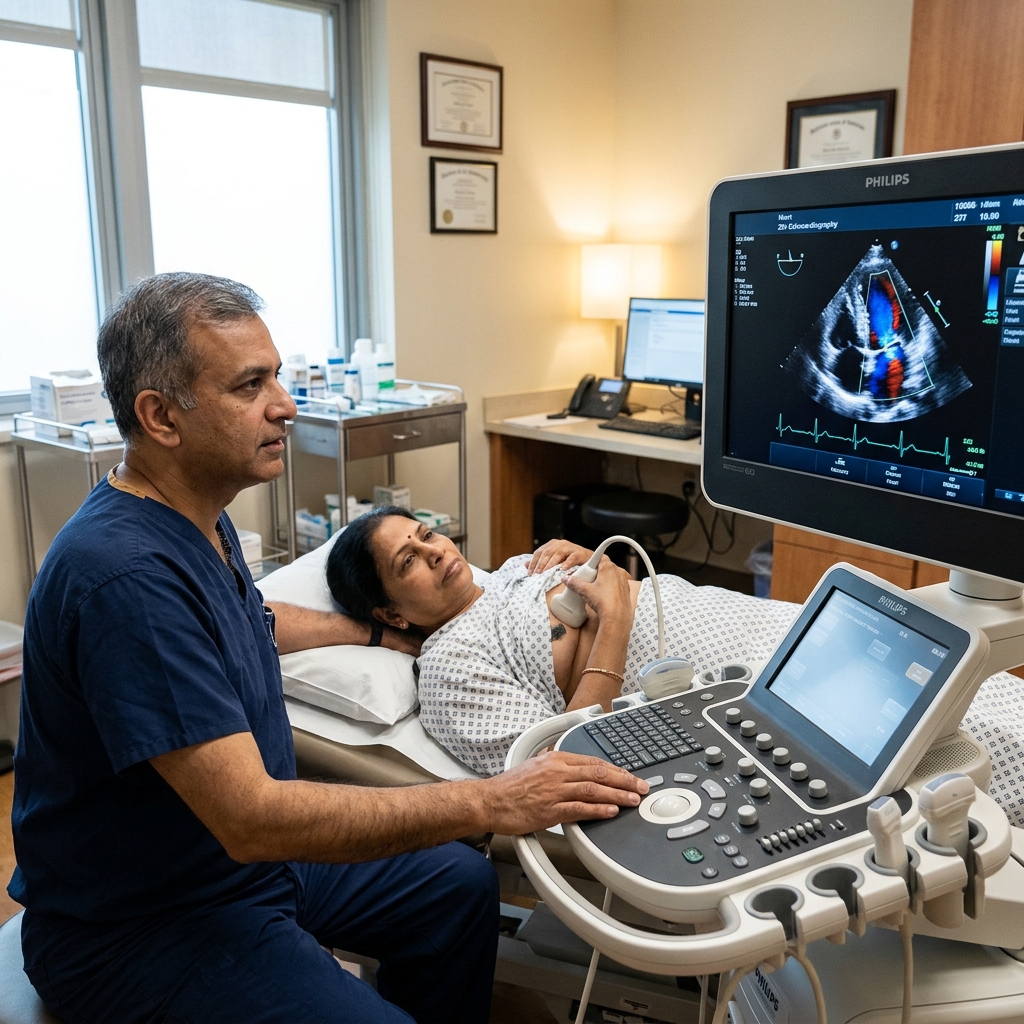
2D Echocardiography
Full Doppler echo assessment of LVH, diastolic function, and valve disease.

Heart Failure
HFrEF and HFpEF management with GDMT optimisation and device therapy.

Cardiac Risk Assessment
Full SCORE2 risk stratification with personalised prevention plan.
Ready to Consult Dr. Amit Singh?
Schedule a clinical consultation at Heartwise Cardiology Clinic, Sector 17, Vashi or Kokilaben Hospital, Navi Mumbai.
Heartwise in Vashi. Procedures at Kokilaben.
OPD consultations, diagnostics, and patient care at Heartwise Cardiology Clinic, Vashi. Interventional procedures performed at Kokilaben Hospital, Koperkhairne.
Heartwise Clinic — Vashi
Sector 17, Vashi
Comprehensive cardiac OPD, diagnostics and consultations at the Heartwise Cardiology Clinic in Sector 17, Vashi, Navi Mumbai.
Kokilaben Hospital — Koperkhairne
Koperkhairne, Navi Mumbai
Tertiary interventional cardiac procedures — angiography, angioplasty, TAVR, structural interventions and device implantation.
Palava City — Dombivli
Palava, Dombivli
Outreach consultation clinic serving Dombivli, Kalyan and surrounding Palava City catchment.
Deepisha Medical Centre — Ulwe
Ulwe, Navi Mumbai
Cardiac OPD consultation clinic serving Ulwe, Seawoods, Belapur and the Navi Mumbai International Airport catchment.
Serving All Sectors of Navi Mumbai & MMR
Patients routinely visit our Vashi clinic from across Navi Mumbai and the surrounding Mumbai Metropolitan Region.
“Beat Better. Live Wiser.”
Dr. Amit Singh, FACC
Consultant Interventional Cardiologist
Medical Disclaimer: This article has been written and reviewed by Dr. Amit Singh, FACC, for educational purposes only. It does not constitute personalised medical advice and should not be used as a substitute for a consultation with a qualified cardiologist. Individual clinical decisions must be made by a treating physician based on complete medical history and examination. If you are experiencing chest pain, breathlessness, or other cardiac symptoms, seek emergency medical care immediately.