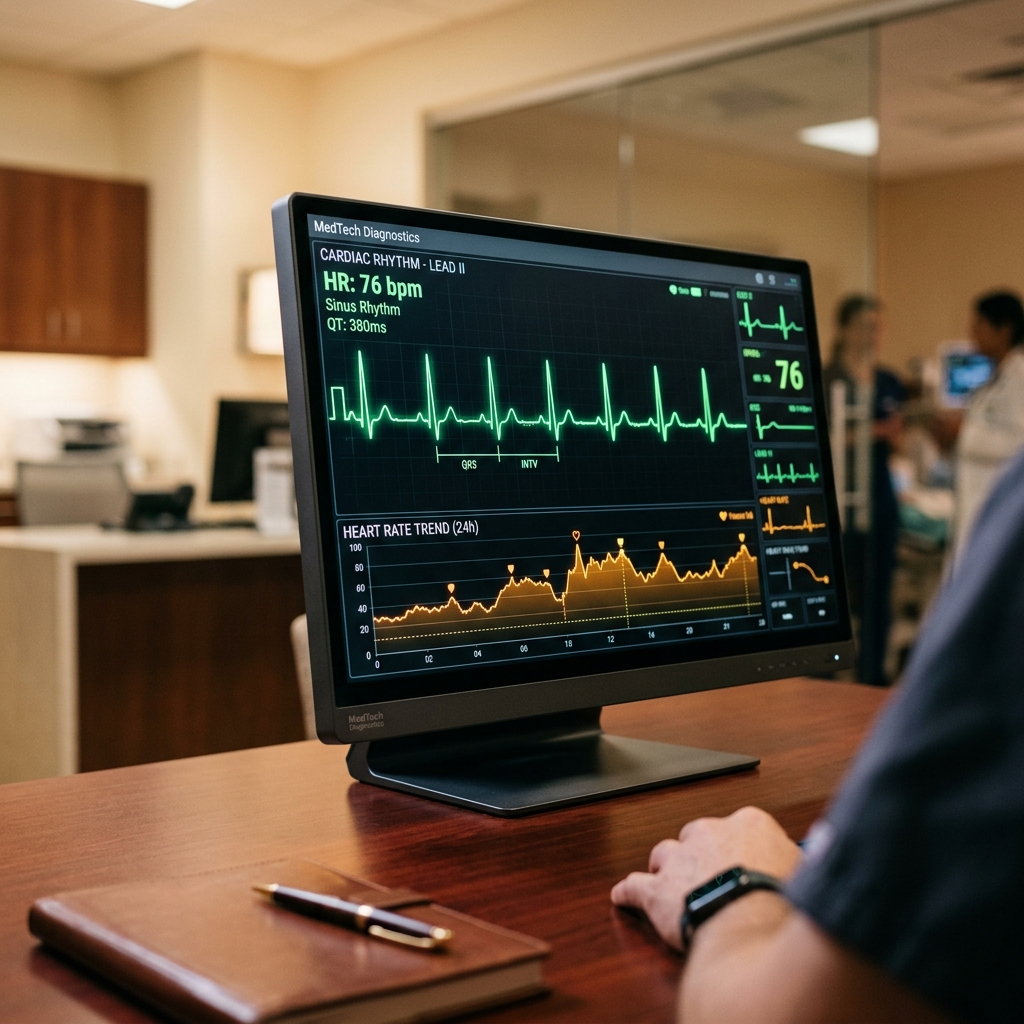
Cardiac Diagnostic Services
Complete cardiac diagnostics in Vashi, Navi Mumbai — ECG, 2D Echo, Holter, ABPM, TMT, and cardiac risk assessment. Same-day reports reviewed directly by Dr. Amit Singh, FACC at Heartwise Cardiology Clinic.
Cardiac Tests Available at Heartwise Cardiology
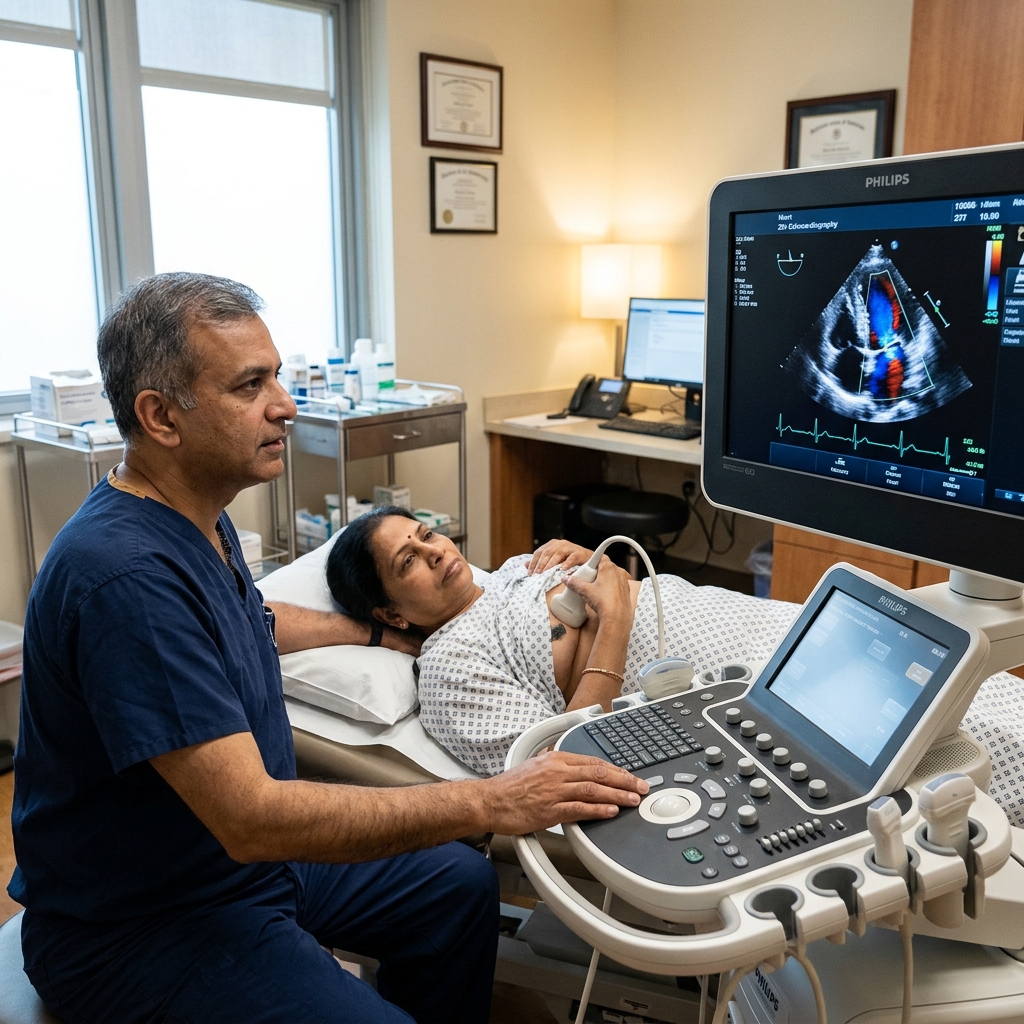
2D Echocardiography with Colour Doppler
Ultrasound imaging of the heart showing chambers, valves, and pumping muscle in real time. Measures ejection fraction, wall motion, valve gradients, and pressures.
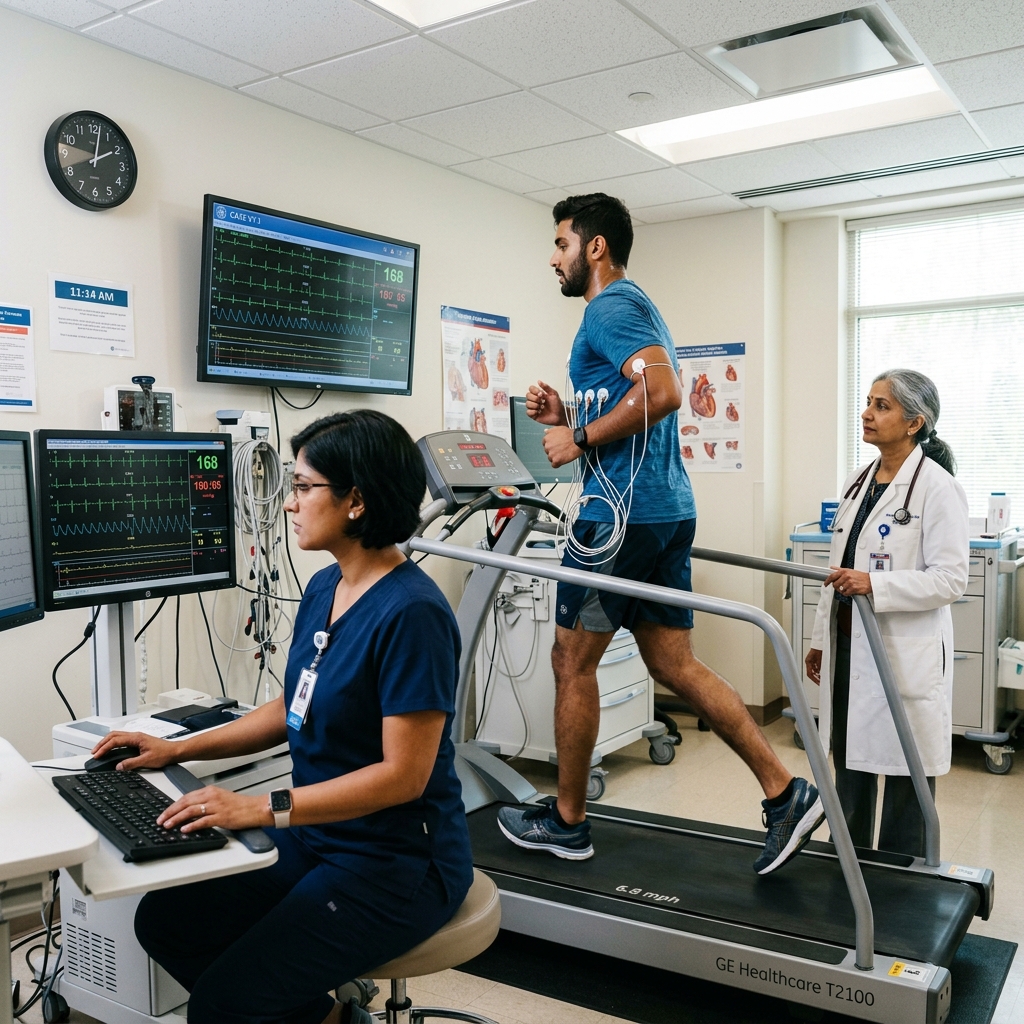
Treadmill Stress Test (TMT)
ECG recorded during graded treadmill exercise to detect exercise-induced ischaemia. Assesses exercise tolerance and reveals hidden coronary artery disease.
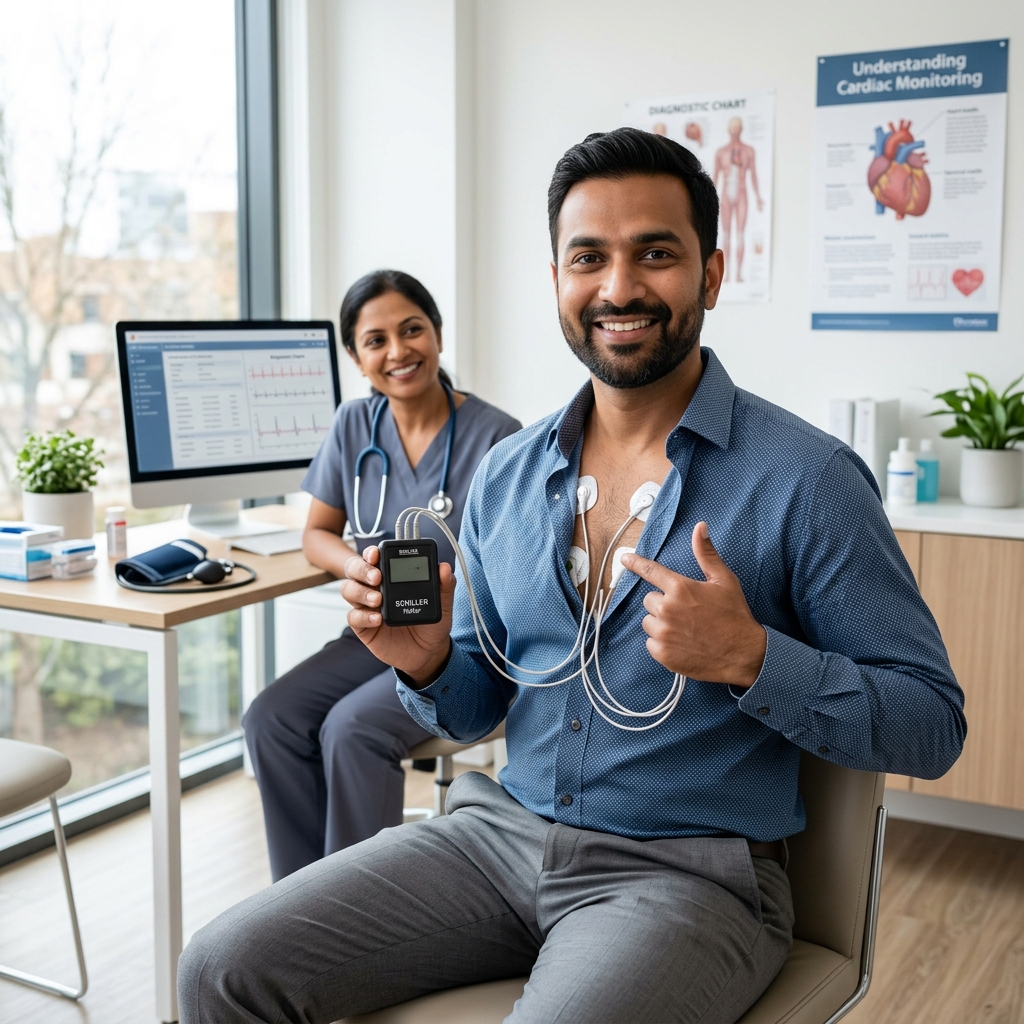
24-Hour Holter Monitoring
Portable ECG recorder worn continuously to record every heartbeat over 24-48 hours, capturing intermittent fluttering, skipped beats, and silent arrhythmias.
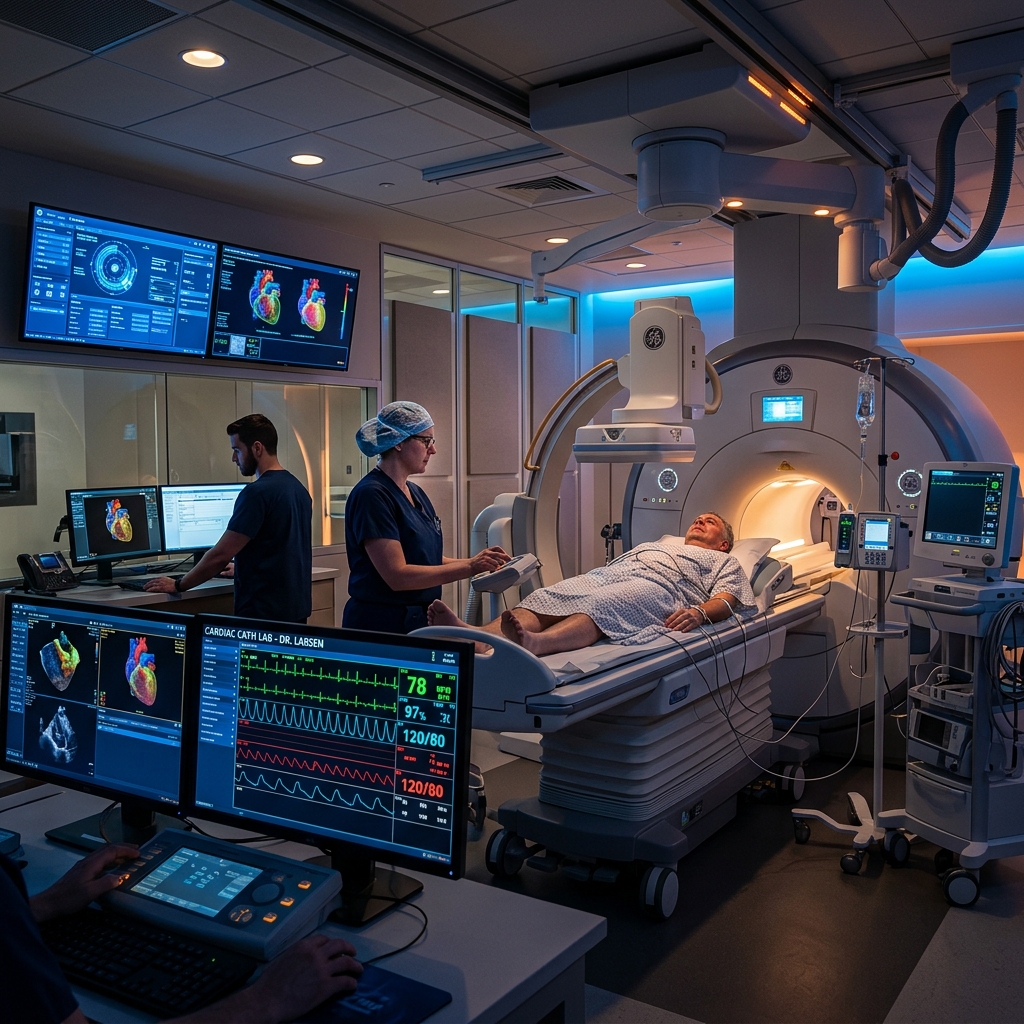
Resting 12-Lead ECG
12-lead electrocardiogram recording heart electrical vectors to diagnose acute infarction, bundle branch blocks, and rhythm abnormalities instantly.
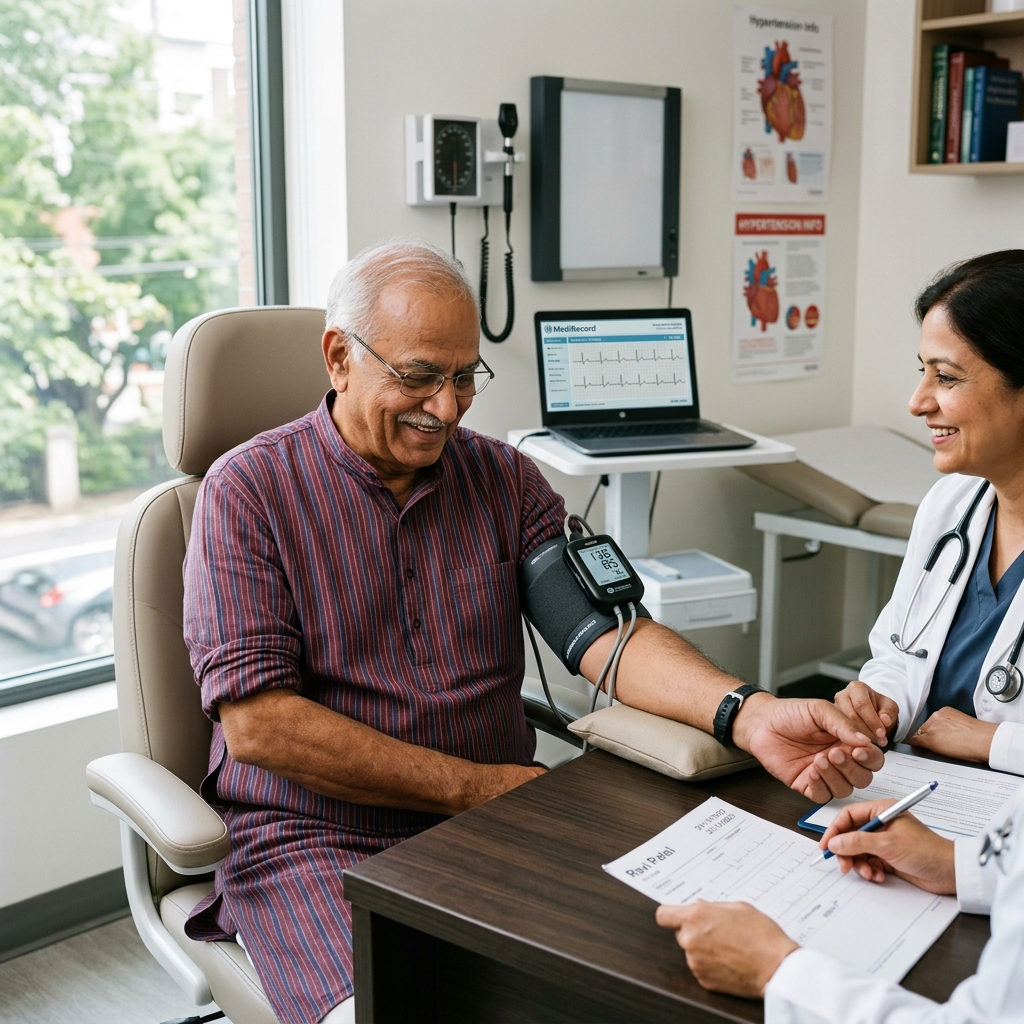
Ambulatory Blood Pressure Monitoring (ABPM)
24-hour automatic blood pressure cuff profiling day/night BP, identifying white-coat hypertension, and assessing nocturnal non-dipping risks.
Cardiac Risk Assessment
Structured 10-year cardiovascular risk stratification combining lipid profiling, SCORE2 algorithms, ECG, and customized lifestyle risk reduction.
Cardiac Diagnostics in Vashi, Navi Mumbai
Every test is reviewed and reported directly by Dr. Amit Singh, FACC — not outsourced to a third-party reporting service.
Reports reviewed directly by Dr. Amit Singh, FACC
Advanced Cardiac Diagnostic Modalities
Required for most diagnostic tests
All tests at Heartwise Clinic, Sector 17, Vashi
Cardiac Diagnostic Tests: At a Glance
Use this table to understand which test is typically recommended for your symptom, and what to expect at each appointment.
| Test | What It Shows | Duration | Preparation | Report Timeline |
|---|---|---|---|---|
| 2D Echocardiography | Heart structure, pump function (EF), valve function, wall motion, pressures | 20–30 min | None required | Same day |
| Treadmill Stress Test (TMT) | ECG changes and symptoms with exercise — detects ischaemia (coronary disease) | 30–45 min | Light meal only; comfortable footwear | Immediate |
| 24-Hour Holter Monitor | Continuous ECG over 24 hours — detects intermittent arrhythmias, AF, pauses | 24–48 hours worn | None; avoid swimming/shower during recording | Next day |
| Resting ECG (12-lead) | Baseline heart rhythm, heart attack evidence, conduction blocks, hypertrophy | 5 min | None required | Immediate |
| ABPM (Ambulatory BP) | 24-hour blood pressure pattern — day/night, dipping status, BP load | 24 hours worn | None; normal daily activities during recording | Next day |
| Cardiac Risk Assessment | 10-year cardiovascular risk score; personalised prevention plan | 30–45 min | Blood tests (lipids, glucose, HbA1c) ideally fasting | Same appointment |
Which Test for Which Symptom?
Select your symptoms to find the right diagnostic test for your situation.
Chest pain or tightness
Start with: ECG (immediately). Then: 2D Echo (wall motion, valve assessment) + TMT (if pain is exertional and stable, ECG normal). If TMT positive → angiography discussion.
Breathlessness or fatigue
First test: 2D Echocardiography — evaluates heart failure (EF), valve disease, pulmonary pressures. ECG simultaneously. If echo normal, consider TMT for exertional dyspnoea.
Palpitations or irregular heartbeat
Resting ECG first. If normal (most palpitations are intermittent), 24-hour Holter to capture arrhythmia during symptoms. Diary of symptoms during Holter essential.
Blackout or fainting (syncope)
ECG immediately. 2D Echo (rule out structural cause — aortic stenosis, HOCM). 24-hour Holter for arrhythmic syncope. Extended monitoring (48hr/7-day) if Holter unrevealing.
High blood pressure / hypertension
2D Echo — assess LV hypertrophy and diastolic dysfunction (end-organ damage). ABPM — confirms true hypertension vs white-coat effect; assesses nocturnal dipping. Guides treatment intensity.
Heart murmur
2D Echocardiography with Doppler is definitive — identifies the valve involved, quantifies severity (gradient, area, regurgitant fraction), and determines whether intervention is needed.
Pre-operative cardiac clearance
ECG baseline. 2D Echo if known or suspected cardiac disease. TMT for patients undergoing major surgery with cardiac risk factors. Report issued for surgical team.
Routine heart check / family history
Cardiac Risk Assessment consultation + blood tests (lipids, glucose, HbA1c). ECG baseline. 2D Echo if any symptoms or family history of cardiomyopathy. Personalised prevention plan provided.
Frequently Asked Questions
Common questions about cardiac diagnostic tests at Heartwise Cardiology.
01Which cardiac test do I need?
The right test depends on your symptoms and clinical history. ECG is the first test for chest pain or palpitations. Echocardiography is best for evaluating heart structure, valve function, and heart failure. Holter monitoring captures intermittent arrhythmias. TMT detects exercise-induced ischaemia. ABPM confirms hypertension. Your cardiologist will recommend the most appropriate test based on a thorough clinical evaluation. At Heartwise Cardiology in Vashi, Dr. Amit Singh personally reviews every case before recommending tests.
02Do I need a referral for diagnostic tests?
No referral is required for most cardiac diagnostic tests at Heartwise Cardiology Clinic, Vashi. You can book an ECG, echocardiogram, Holter monitor, ABPM, TMT, or cardiac risk assessment directly. However, if you are covered by insurance that mandates a referral, please check with your provider. We recommend calling +91 97695 17636 before your visit for any insurance or pre-authorisation questions.
03How long do test results take?
ECG and TMT results are available immediately after the test — the same visit. 2D Echocardiography reports are typically ready the same day, reviewed and signed by Dr. Amit Singh. Holter monitor and ABPM reports are available the next working day after the recording period. Cardiac risk assessment results are discussed during the same appointment, with a written report provided immediately.
04Are cardiac diagnostic tests painful?
No — all standard cardiac diagnostic tests are non-invasive and painless. ECG involves small adhesive electrodes placed on the chest, arms, and legs — you may feel a mild sensation when they are removed. Echocardiography uses a warm ultrasound gel and a gentle probe moved across the chest. Holter monitoring and ABPM involve wearing compact devices. TMT involves walking on a treadmill at gradually increasing intensity — similar to a brisk workout. None of these tests require needles or incisions.
05What is the difference between an echo and an ECG?
An ECG (electrocardiogram) records the electrical activity of the heart — it shows heart rate, rhythm, and evidence of heart attacks or conduction blocks. An echocardiogram (echo) uses ultrasound to create moving images of the heart — it shows the structure of chambers and valves, pumping strength (ejection fraction), and blood flow patterns. They are complementary tests: ECG checks the electrical system, echo checks the mechanical pump. Both are often performed together for a complete cardiac assessment.
Heartwise in Vashi. Procedures at Kokilaben.
OPD consultations, diagnostics, and patient care at Heartwise Cardiology Clinic, Vashi. Interventional procedures performed at Kokilaben Hospital, Koperkhairne.
Heartwise Clinic — Vashi
Sector 17, Vashi
Comprehensive cardiac OPD, diagnostics and consultations at the Heartwise Cardiology Clinic in Sector 17, Vashi, Navi Mumbai.
Kokilaben Hospital — Koperkhairne
Koperkhairne, Navi Mumbai
Tertiary interventional cardiac procedures — angiography, angioplasty, TAVR, structural interventions and device implantation.
Palava City — Dombivli
Palava, Dombivli
Outreach consultation clinic serving Dombivli, Kalyan and surrounding Palava City catchment.
Deepisha Medical Centre — Ulwe
Ulwe, Navi Mumbai
Cardiac OPD consultation clinic serving Ulwe, Seawoods, Belapur and the Navi Mumbai International Airport catchment.
Serving All Sectors of Navi Mumbai & MMR
Patients routinely visit our Vashi clinic from across Navi Mumbai and the surrounding Mumbai Metropolitan Region.
Ready to Consult Dr. Amit Singh?
Schedule a clinical consultation at Heartwise Cardiology Clinic, Sector 17, Vashi or Kokilaben Hospital, Navi Mumbai.