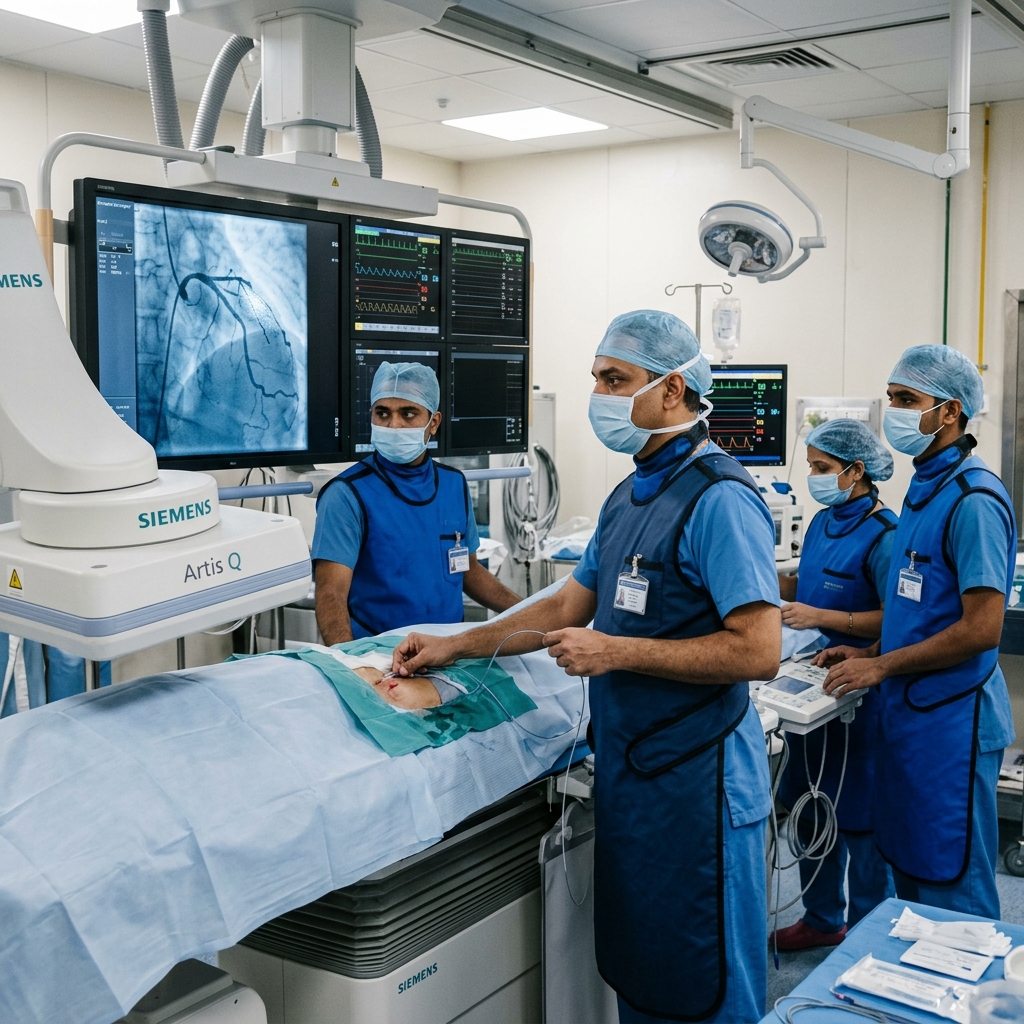
TAVR / TAVI Aortic Valve Replacement Without Surgery
TAVR (Transcatheter Aortic Valve Replacement) — also called TAVI (Transcatheter Aortic Valve Implantation) — is a minimally invasive procedure that replaces a severely diseased aortic valve with a new bioprosthetic valve made from bovine or porcine pericardial tissue, using transcatheter delivery: the compressed valve is mounted on a catheter, advanced through the vasculature via the femoral artery in the groin, and deployed at the native aortic annulus — without opening the chest. This catheter-based mechanism is what distinguishes TAVR from SAVR, which requires open thoracotomy and cardiopulmonary bypass to reach the valve. The compressed valve is expanded within the diseased native valve using either a balloon or self-expanding mechanism, immediately restoring normal valve function. No sternotomy. No cardiopulmonary bypass. Hospital stay 2–3 days. The PARTNER 3 trial (NEJM 2019, n = 1,000) established TAVR as equivalent to surgical valve replacement even in low-risk patients — with superior 30-day outcomes (MACE 11.0% vs 3.3%)..
What Is Aortic Stenosis?
Aortic stenosis is a progressive disease in which the aortic valve — the outlet valve between the left ventricle and the aorta — becomes calcified and narrowed over time. As the valve area narrows, the heart must work increasingly harder to push blood through the restricted opening. Severe aortic stenosis (valve area <1.0 cm²; normal 3–4 cm²) is a life-threatening condition. Untreated symptomatic severe aortic stenosis carries a median survival of 2–3 years after symptom onset — worse than many cancers. TAVR or surgery is essential once symptoms develop.
Severe AS — Valve area <1.0 cm², Mean gradient >40 mmHg, Peak velocity >4 m/s
→ TAVR or Surgery when symptomaticModerate AS — Valve area 1.0–1.5 cm², Mean gradient 20–40 mmHg, Peak velocity 3–4 m/s
→ Annual echo surveillance; optimise risk factorsMild AS — Valve area >1.5 cm², Mean gradient <20 mmHg, Peak velocity <3 m/s
→ Monitor every 3–5 years; no interventionBalloon-Expandable vs Self-Expanding Valves
A head-to-head comparison of balloon inflation mechanics and self-expanding nitinol frames.
Balloon-Expandable Valve
Examples: Edwards SAPIEN 3, SAPIEN 3 Ultra, SAPIEN XT
Technical Specs
- •Highly predictable deployment — accurate positioning
- •Lower pacemaker implantation rate (≈5–10%)
- •Strong radial force — useful in calcified annuli
- •Excellent durability data at 5–8 years
- •Available from 20mm to 29mm; covers most annuli
Key Trial
PARTNER 3 primary trial valve: SAPIEN 3 · Outer sealing skirt: significant PVL now <1%
Self-Expanding Valve
Examples: Medtronic Evolut R, Evolut PRO, Evolut PRO+
Technical Specs
- •Fully recapturable and repositionable (Evolut PRO)
- •Supra-annular design — larger effective orifice area
- •Excellent choice for bicuspid aortic valve anatomy
- •Wide size range: 23mm to 34mm
- •Evolut Low-Risk trial: non-inferior to surgery
Key Point
Higher pacemaker rate than BE (≈15–25%) — important patient counselling point
The Importance of CT Angiography Sizing
Ensuring optimal device selection, height placement, and femoral pathway validation.
The Implantation Process in Detail
A deep clinical view into the transfemoral approach, pre-dilation pacing, and vascular closure.
Anaesthesia & Vascular Access
The transfemoral approach is preferred in >95% of cases. Two femoral access points are established: a large-bore access site (14–16Fr sheath) for valve delivery and a smaller contralateral site for haemodynamic monitoring and a temporary pacing wire. A transoesophageal echocardiography (TOE) probe is placed if general anaesthesia is used.
Aortic Valve Crossing & Pre-Dilation
A guidewire is advanced retrogradely across the diseased aortic valve into the left ventricle. Pre-dilation of the stenotic valve with a balloon catheter (balloon aortic valvuloplasty) during rapid right ventricular pacing (150–200 bpm) temporarily reduces cardiac output and stabilises the deployment zone. Some centres now perform direct TAVR without pre-dilation for selected cases.
Valve Delivery & Positioning
The compressed TAVR valve — mounted on its delivery catheter — is advanced over the guidewire from the femoral artery, up the aorta, and positioned at the native aortic annulus. Positioning is confirmed using fluoroscopy and, if available, 3D CT-fluoroscopy overlay or echocardiographic guidance. Coaxial alignment is essential.
Valve Deployment
For balloon-expandable valves: the balloon is inflated under rapid pacing (to reduce cardiac motion and output), expanding the valve frame in seconds. For self-expanding valves: the outer sheath is retracted to release the valve, which expands gradually — the system can be recaptured and repositioned if needed before full release. The new valve immediately begins functioning.
Post-Deployment Assessment
Aortography and echocardiography confirm: valve position, paravalvular leak (PVL) grade, coronary flow, mean gradient across the new valve, and any wall motion changes. If significant PVL is detected, post-dilation with a larger balloon is performed. Final haemodynamics are recorded.
Vascular Closure & Recovery
Large-bore femoral access sites are closed with percutaneous closure devices (ProGlide, MANTA). The patient is moved to the Cardiac ICU or HDU for 12–24 hours of monitoring, then transferred to the ward. Discharge is typically on day 2 or 3. ECG monitoring detects any conduction disturbance (pacemaker requirement) before discharge.
The Definitive Randomised Clinical Trials
Reviewing the historical progression from extreme high-risk cohorts to the low-risk PARTNER 3 population.
TAVR vs standard medical therapy in patients with severe AS deemed inoperable for surgery — the landmark trial that proved TAVR can save lives where surgery is impossible.
Absolute reduction in 1-year all-cause mortality: TAVR 30.7% vs standard therapy 50.7%TAVR (SAPIEN XT) vs surgery in intermediate surgical risk severe AS — established TAVR non-inferiority and opened the procedure to the much larger intermediate-risk population.
2-year death/stroke: 19.3% TAVR vs 21.1% surgery. TAVR non-inferior.TAVR (SAPIEN 3) vs surgery in low surgical risk severe AS — the definitive trial establishing TAVR as superior at 30 days and non-inferior at 1 year in the lowest-risk patients.
30-day death/stroke/rehospitalisation: TAVR vs surgery (p<0.001)Self-expanding Evolut R/PRO vs surgery in low surgical risk severe AS — confirming that TAVR's low-risk indication applies to both valve platforms, not just balloon-expandable.
24-month death/disabling stroke: 5.3% Evolut vs 6.7% surgery. Non-inferiority met.TAVR Benefits & Risks Overview
Comparing cardiac outcomes, recovery pathways, and late complications head-to-head.
Core Clinical Benefits
- Bypasses chest splitting (sternotomy) or surgical trauma
- No bypass machine or cardiac standstill necessary
- Typically discharged in 2 to 3 days
- Rapid physical recovery in 1 to 2 weeks
- Proven safe and superior across all surgical risk groups
- Significant, rapid improvements in breathlessness & energy
Potential Risks & Incidence
- Pacemaker dependence: 5-10% balloon; 15-25% self-expanding
- Paravalvular leakage (PVL): Mild common; moderate/severe <2%
- Access site hematoma or vascular complication: 2-5%
- Stroke risk: 30-day stroke approximately 2-3%
- Coronary obstruction: rare but severe (<0.5%)
Frequently Asked Questions
Detailed, peer-reviewed answers to the most common patient concerns regarding stenting and long-term care.
01What is TAVR or TAVI?
TAVR (Transcatheter Aortic Valve Replacement) — also called TAVI — replaces a severely narrowed aortic valve with a new bioprosthetic valve delivered through a catheter in the femoral artery in the groin, without opening the chest or stopping the heart. The new valve is compressed onto a catheter, positioned within the diseased native valve, and expanded — immediately restoring normal valve function. Hospital stay is 2–3 days. The PARTNER 3 trial (NEJM 2019) established TAVR as superior at 30 days versus surgical valve replacement even in low surgical risk patients.
02Who needs TAVR?
TAVR is indicated for patients with severe symptomatic aortic stenosis (valve area <1.0 cm², mean gradient >40 mmHg, or peak velocity >4 m/s) with symptoms of breathlessness, chest pain, or fainting. Current 2022 ESC/EACTS and 2021 ACC/AHA guidelines recommend TAVR for all symptomatic patients over 75 (Class I recommendation), and a Heart Team decision for patients under 75. TAVR is also the preferred approach for patients at high or prohibitive surgical risk at any age.
03What is the difference between TAVR and open-heart surgery?
Open-heart aortic valve surgery (SAVR) requires a sternotomy (chest opening), cardiopulmonary bypass, general anaesthesia, 7–10 days in hospital, and 6–8 weeks recovery. TAVR uses a catheter in the femoral artery — no chest opening, no bypass machine. Hospital stay is 2–3 days; most patients return to normal activity within 1–2 weeks. The PARTNER 3 trial demonstrated that TAVR produces superior 30-day outcomes vs surgery (MACE 1.0% vs 3.3%) even in low surgical risk patients, with equivalent 2-year outcomes.
04How long does a TAVR valve last?
Modern TAVR bioprosthetic valves have demonstrated durable function in registry data up to 10 years, with structural valve deterioration (gradual calcification of the tissue leaflets) in approximately 10–15% of patients at 10 years. If a TAVR valve does deteriorate, a second valve can be delivered inside the first via valve-in-valve TAVR — avoiding surgery entirely. Long-term durability beyond 15 years is still being established through ongoing registries. This durability question is why younger patients (<65 years) may still be offered surgical valve replacement as first choice in some cases.
05Is TAVR painful?
TAVR is performed under sedation or general anaesthesia — patients are comfortable throughout and feel no pain during the procedure. Mild groin discomfort at the access site is common for 2–4 days after. Since there is no sternotomy (chest opening), there is no chest wound pain — a major advantage over surgery. Many patients are surprised by how little discomfort they experience. The dramatic improvement in breathing and energy levels that follows aortic valve replacement is often noticeable within days of the procedure.
06What medications are needed after TAVR?
After TAVR, most patients receive dual antiplatelet therapy (aspirin 75 mg + clopidogrel 75 mg daily) for 3–6 months, followed by aspirin alone lifelong. Unlike mechanical heart valves, TAVR bioprosthetic valves do not require lifelong warfarin anticoagulation unless the patient has another indication such as atrial fibrillation. For patients in atrial fibrillation, a DOAC (direct oral anticoagulant) such as rivaroxaban or apixaban may replace the antiplatelet regimen — this decision is made individually after the procedure.
TAVR Indications & Patient Selection
Current ESC/EACTS and ACC/AHA guideline recommendations for transcatheter aortic valve replacement.
| Patient Category | Guideline Recommendation | Class |
|---|---|---|
| Age ≥75 years with symptomatic severe AS | TAVR recommended over SAVR | Class I |
| Age 65–74 with symptomatic severe AS | TAVR or SAVR — Heart Team decision | Class IIa |
| Age <65 or life expectancy >20 years | SAVR preferred; TAVR if prohibitive surgical risk | Class IIb |
| Inoperable / extreme surgical risk | TAVR recommended (PARTNER B criteria) | Class I |
| Bicuspid aortic valve anatomy | TAVR feasible at experienced centres with CT planning | Class IIa |
TAVR vs Surgical AVR
Head-to-head comparison of transcatheter versus surgical aortic valve replacement.
| Feature | TAVR | SAVR (Surgery) |
|---|---|---|
| Incision | No — transfemoral catheter | Sternotomy (chest opening) |
| Anaesthesia | Local + sedation or general | General anaesthesia |
| Hospital stay | 2–3 days | 5–7 days |
| Recovery | 1–2 weeks | 6–8 weeks |
| Cardiopulmonary bypass | No | Yes |
| 30-day MACE (low risk) | 1.0% (PARTNER 3) | 3.3% (PARTNER 3) |
| Pacemaker need | 5–25% | 3–5% |
| Paravalvular leak | Mild more common | Rare |
| Valve durability (5 yr) | Excellent — comparable to surgical | Excellent — benchmark |
Recovery After TAVR
Expected recovery trajectory after transcatheter aortic valve replacement.
In Hospital (Days 1–3)
- ICU monitoring for first 12–24 hours with continuous ECG and haemodynamic monitoring
- Bed rest for 4–6 hours after sheath removal; mobilise gradually with physiotherapy
- Echocardiogram within 24 hours to assess valve function, gradient, and paravalvular leak
- Pacemaker observation: if new LBBB or conduction abnormality, monitor for 48–72 hours
- Discharge typically on day 2 or 3 after confirming stable device parameters and mobility
First Month at Home
- No heavy lifting (>5 kg) for 2 weeks; avoid strenuous activity for 4 weeks
- Wound care: keep groin/access site dry for 48 hours; report any swelling, pain, or discharge
- Antiplatelet therapy: aspirin + clopidogrel for 3–6 months post-TAVR (per local protocol)
- Notify cardiologist if chest pain, breathlessness, palpitations, or fever develop
Long-Term Follow-Up
- Clinical review and echocardiogram at 1 month, 6 months, and annually
- Lifelong aspirin (or anticoagulation if AF develops post-TAVR)
- Endocarditis prophylaxis for dental procedures in first 6 months
- Monitor for valvular degeneration: annual echo beyond year 5
| Timeframe | Key Events |
|---|---|
| Day 0–1 | ICU monitoring, echo, mobilise |
| Day 2–3 | Discharge, wound care instructions |
| Week 1–2 | Light activity, follow-up call |
| Month 1 | First follow-up, echo, clinical review |
| Month 6 | Annual surveillance begins |
Post-TAVR Results Interpretation
Key haemodynamic and echocardiographic parameters for assessing TAVR success.
| Parameter | Target | Clinical Significance |
|---|---|---|
| Mean aortic gradient | <20 mmHg | Excellent valve haemodynamics; >20 mmHg suggests patient-prosthesis mismatch |
| Peak velocity | <3 m/s | Normal transvalvular flow velocity |
| Valve area | >1.2 cm² | No significant stenosis |
| Paravalvular leak (PVL) | None / Mild | Moderate-severe PVL associated with increased mortality |
| New LBBB | Avoid / transient | Persistent LBBB increases pacemaker risk; monitor 48–72h |
“Precision in structural interventions. Excellence in clinical outcomes.”

Dr. Amit Singh, FACC
Consultant Interventional Cardiologist
Cardiac Services Available at Heartwise
Dr. Amit Singh offers comprehensive cardiac diagnostics and management at Heartwise Cardiology Clinic, Vashi.
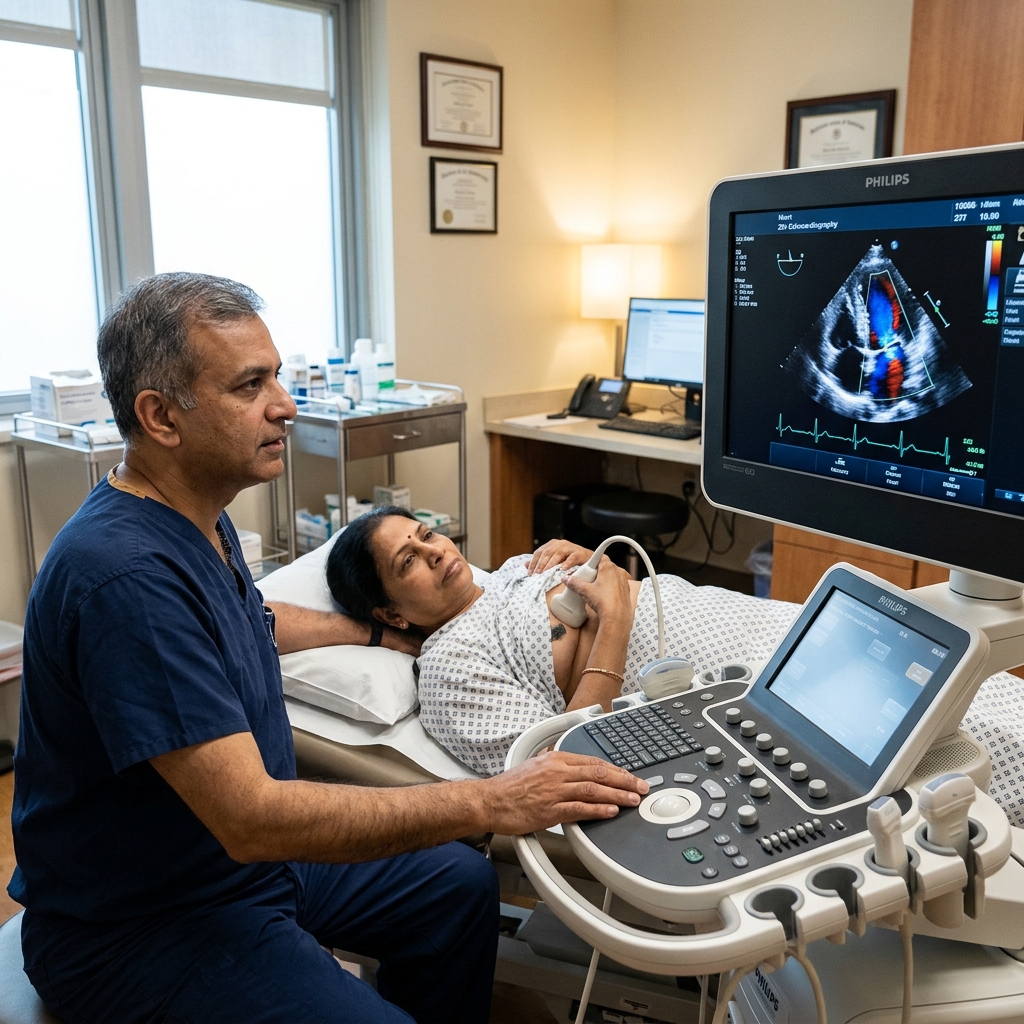
2D Echocardiography
Detailed echo assessment of AVA, mean gradient, and LV function.
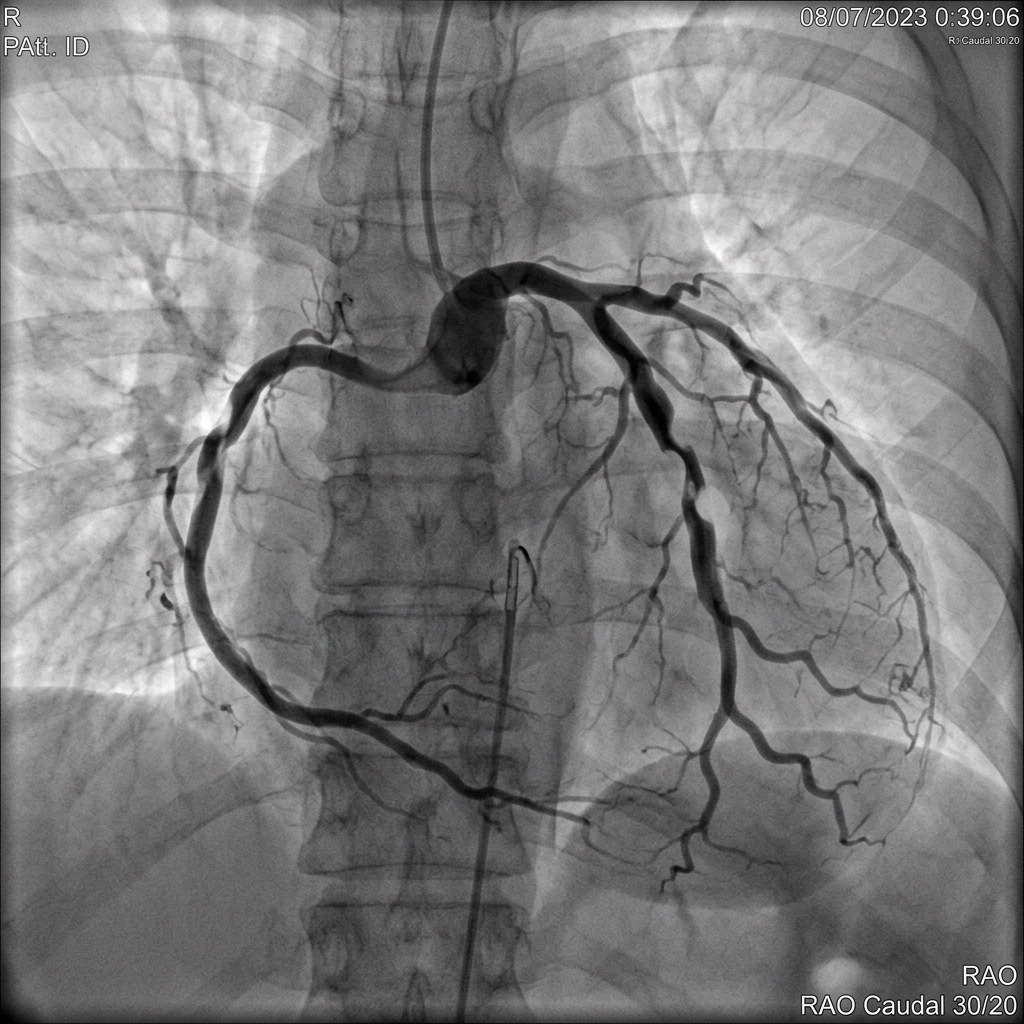
Coronary Angiography
Pre-TAVR coronary assessment — CAD frequently coexists with AS.
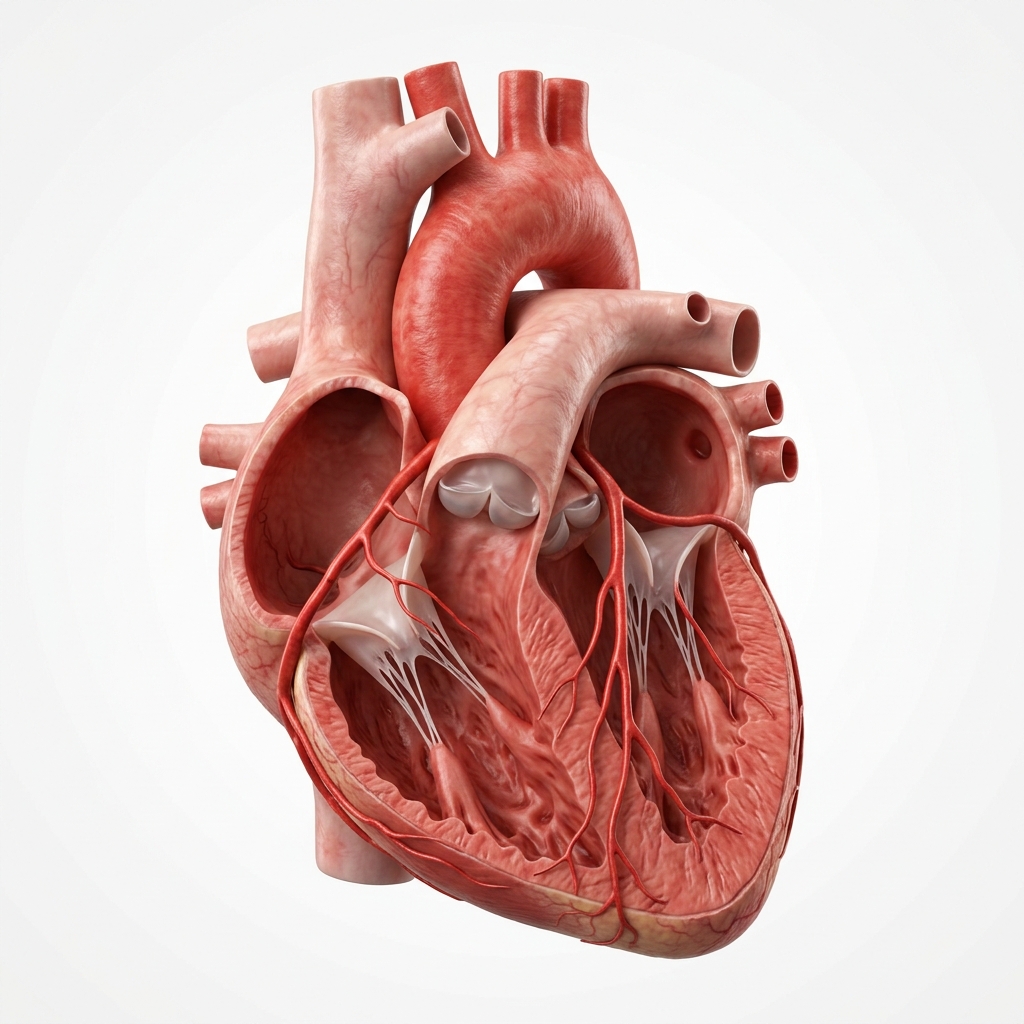
Aortic Stenosis
Aortic stenosis diagnosis, grading, and treatment decision-making.

Heart Failure
Post-TAVR heart failure monitoring and long-term care.
Ready to Consult Dr. Amit Singh?
Schedule a clinical consultation at Heartwise Cardiology Clinic, Sector 17, Vashi or Kokilaben Hospital, Navi Mumbai.
Heartwise in Vashi. Procedures at Kokilaben.
OPD consultations, diagnostics, and patient care at Heartwise Cardiology Clinic, Vashi. Interventional procedures performed at Kokilaben Hospital, Koperkhairne.
Heartwise Clinic — Vashi
Sector 17, Vashi
Comprehensive cardiac OPD, diagnostics and consultations at the Heartwise Cardiology Clinic in Sector 17, Vashi, Navi Mumbai.
Kokilaben Hospital — Koperkhairne
Koperkhairne, Navi Mumbai
Tertiary interventional cardiac procedures — angiography, angioplasty, TAVR, structural interventions and device implantation.
Palava City — Dombivli
Palava, Dombivli
Outreach consultation clinic serving Dombivli, Kalyan and surrounding Palava City catchment.
Deepisha Medical Centre — Ulwe
Ulwe, Navi Mumbai
Cardiac OPD consultation clinic serving Ulwe, Seawoods, Belapur and the Navi Mumbai International Airport catchment.
Serving All Sectors of Navi Mumbai & MMR
Patients routinely visit our Vashi clinic from across Navi Mumbai and the surrounding Mumbai Metropolitan Region.
“Beat Better. Live Wiser.”
Dr. Amit Singh, FACC
Consultant Interventional Cardiologist
Medical Disclaimer: This article has been written and reviewed by Dr. Amit Singh, FACC, for educational purposes only. It does not constitute personalised medical advice and should not be used as a substitute for a consultation with a qualified cardiologist. Individual clinical decisions must be made by a treating physician based on complete medical history and examination. If you are experiencing chest pain, breathlessness, or other cardiac symptoms, seek emergency medical care immediately.