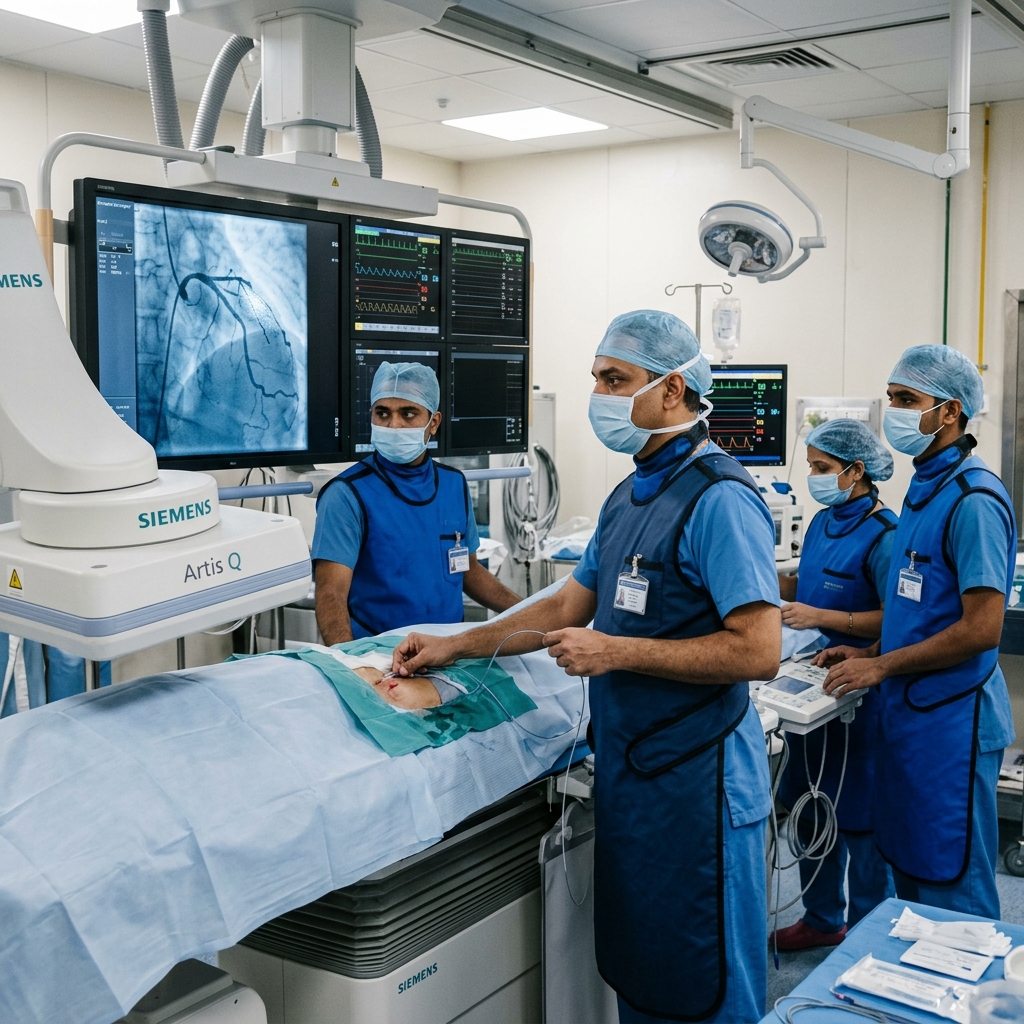
Structural Heart Interventions
TAVR · MitraClip · ASD Closure — Without Open-Heart Surgery. Catheter-based structural heart interventions replace or repair diseased heart structures via radial or femoral vessels — completely avoiding chest opening, sternotomies, or bypass circuits.
What is Structural Heart Disease?
Defining structural heart disease and the transition from open-heart surgery to transcatheter interventions.
Structural heart disease refers to abnormalities in the physical structures of the heart — the valves, walls (septa), and chambers — as distinct from coronary artery disease (which involves the coronary blood vessels). The most common structural conditions treated with catheter-based interventions are aortic stenosis (narrowed aortic valve), mitral regurgitation (leaking mitral valve), and atrial septal defect (hole between the upper heart chambers). Traditionally, replacing a valve or closing a septal defect required open-heart surgery, a sternotomy (splitting the chest bone), placing the patient on cardiopulmonary bypass, and a 6–8 week recovery period. Today, transcatheter structural heart interventions achieve the same anatomical goals by delivering devices through the femoral vessels in the leg, completely avoiding open-heart surgery.
ASD device closure success rate (suitable anatomy)
ACC/AHA Valve Guidelines 2020MitraClip: reduction in all-cause mortality vs medical therapy
COAPT trial · NEJM 2018Days hospital stay after TAVR (vs 7–10 days for surgery)
Standard clinical experienceStructural interventions performed at Kokilaben Hospital
TAVR · MitraClip · ASD Device ClosureTranscatheter Interventions
Three major structural heart interventions performed by Dr. Amit Singh at Kokilaben Hospital.
TAVR / TAVI
01Transcatheter Aortic Valve Replacement (TAVR) — also called TAVI — delivers a new bioprosthetic heart valve, compressed onto a catheter, through the femoral artery in the groin to the heart, where it is expanded inside the diseased native valve using a balloon or self-expanding mechanism. The new valve immediately takes over function. No sternotomy. No cardiopulmonary bypass. TAVR was initially restricted to inoperable or high surgical risk patients. The PARTNER 3 trial (NEJM 2019, n = 1,000) established TAVR as equivalent to surgical valve replacement even in low surgical risk patients, with superior 30-day outcomes (MACE 1.0% vs 3.3%). Current ESC/ACC guidelines give TAVR a Class I recommendation for patients over 75 and a Heart Team-based recommendation for younger patients.
TAVR vs surgery in low-risk aortic stenosis: 1-year death/stroke/rehospitalisation 8.5% vs 15.1%. TAVR non-inferior across all subgroups.
MitraClip
02MitraClip is a transcatheter edge-to-edge mitral valve repair technique. A small clip device is advanced via a catheter through the femoral vein, through the interatrial septum, and into the left heart — where it grasps and approximates the two leaflets of the leaking mitral valve, reducing regurgitation without replacing the valve. The procedure is performed under general anaesthesia with transoesophageal echocardiographic (TOE) guidance. It is particularly effective in patients with functional mitral regurgitation caused by heart failure, who are at high surgical risk. The COAPT trial (NEJM 2018, n = 614) demonstrated MitraClip reduced heart failure hospitalisation by 47% and all-cause mortality by 38% at 2 years versus optimal medical therapy alone — results that directly changed the 2021 ESC Heart Failure Guidelines.
MitraClip vs medical therapy in HF + functional MR: 2-year HF hospitalisation 35.8% vs 67.9% (−47%). All-cause mortality: 29.1% vs 46.1% (−38%).
ASD Device Closure
03Transcatheter ASD device closure uses a collapsible, self-expanding metallic mesh device (most commonly the Amplatzer Septal Occluder or similar) delivered via a catheter through the femoral vein. The device is deployed across the defect under transoesophageal echocardiographic guidance, where its two discs straddle the septum and permanently close the hole. Transcatheter closure is now the preferred approach for secundum-type ASD with favourable anatomy — it avoids open-chest surgery entirely, achieves >95% closure success, and allows discharge within 24–48 hours. Long-term results are equivalent to surgical closure for suitable defects. Patients require 6 months of antiplatelet therapy while the device endothelialises. Contraindications to transcatheter closure include insufficient septal rim, primum-type defects, and associated complex cardiac anatomy — these require surgical referral.
Transcatheter ASD closure is recommended (Class I) for symptomatic secundum ASD with right heart volume overload when anatomy is suitable — preferred over surgical closure.
Landmark Clinical Trials
Structural heart interventions are backed by robust, multi-centre randomised controlled trials published in the New England Journal of Medicine.
TAVR vs surgical aortic valve replacement in low surgical risk patients with severe aortic stenosis.
30-day major adverse events: TAVR vs surgeryTAVR vs standard therapy in inoperable severe aortic stenosis — the landmark trial that established TAVR.
Relative reduction in 1-year all-cause mortality with TAVR vs standard therapyMitraClip vs optimal medical therapy in heart failure + functional mitral regurgitation.
HF hospitalisation: MitraClip vs medical therapy at 2 yearsThe evidence base for structural heart interventions continues to rapidly expand, with ongoing trials investigating TAVR in asymptomatic severe aortic stenosis (EARLY TAVR) and moderate aortic stenosis in heart failure patients (TAVR UNLOAD).
Who Needs a Structural Intervention?
Guideline-directed clinical triggers indicating the need for transcatheter valve replacement or repair.
| Cardiac Condition | Intervention | Guideline Criteria | Urgency |
|---|---|---|---|
| Severe symptomatic aortic stenosis (AVA <1.0 cm², mean gradient >40 mmHg) | TAVR / TAVI | Symptoms: breathlessness, angina, syncope. Any surgical risk level (per 2023 ESC/EACTS and 2021 ACC/AHA guidelines) | |
| Severe aortic stenosis — asymptomatic | TAVR / TAVI | EF <50%, LVOT/valve velocity criteria, or rapid progression on serial imaging. Heart Team decision. | |
| Severe secondary (functional) mitral regurgitation (MR ≥ Grade 3+ with HF symptoms) | MitraClip | Heart failure (HFrEF), high surgical risk, LVESD <70 mm, anatomy suitable on echo/CT, on optimised GDMT | |
| Severe primary (degenerative) mitral regurgitation | MitraClip or surgical repair | High or prohibitive surgical risk. Anatomy assessed on TOE: suitable leaflet morphology, coaptation gap <10 mm | |
| Significant ASD with right heart volume overload (Secundum-type ASD, Qp:Qs ≥ 1.5:1) | ASD Device Closure | Adequate septal rim ≥5 mm, defect diameter ≤38 mm, no significant pulmonary hypertension (PVR <5 WU) | |
| Cryptogenic stroke / TIA with PFO/ASD | ASD / PFO Closure | High-risk PFO features, age <65, no other stroke cause identified. CLOSE/RESPECT trial evidence. |
The Guideline Heart Team Approach
Ensuring optimal clinical choices through interdisciplinary collaborative review before any intervention.
Interventional Cardiologist (Dr. Amit Singh, FACC)
Leads catheter-based planning: access route, valve sizing, device selection, procedural technique. EAPCI Certified in Interventional Cardiology.
Cardiac Surgeon
Assesses surgical risk, evaluates whether surgical repair or replacement is preferable, and provides on-standby emergency backup during the procedure at Kokilaben Hospital.
Cardiac Imaging Specialist
CT angiography analysis for TAVR (annulus sizing, access route planning, calcium mapping); transoesophageal echocardiography (TOE) for MitraClip and ASD guidance.
Cardiac Anaesthesiologist
Manages sedation or general anaesthesia; monitors haemodynamics in real-time; essential for MitraClip (general anaesthesia + TOE) and high-risk TAVR patients.
The Patient
Central to every Heart Team discussion. The patient's preferences, quality of life goals, and understanding of the decision are an integral part of the process. Informed consent is structured and deliberate.
Frequently Asked Questions
Detailed, peer-reviewed answers to the most common patient concerns regarding stenting and long-term care.
01What is structural heart disease?
Structural heart disease refers to abnormalities in the physical structures of the heart — the valves, walls (septa), and chambers — as distinct from coronary artery disease (which involves the coronary blood vessels). The most common structural conditions treated with catheter-based interventions are aortic stenosis (narrowed aortic valve), mitral regurgitation (leaking mitral valve), and atrial septal defect (hole between the upper heart chambers). All three can now be treated transcatheterly — without opening the chest — at Kokilaben Dhirubhai Ambani Hospital, Koperkhairne.
02What is TAVR and who needs it?
TAVR (Transcatheter Aortic Valve Replacement) replaces a severely narrowed aortic valve with a new bioprosthetic valve delivered via a catheter through the femoral artery — without opening the chest. It is indicated for patients with severe symptomatic aortic stenosis. The PARTNER 3 trial (NEJM 2019) established TAVR as equivalent to surgery in low-risk patients, with superior 30-day outcomes (MACE 1.0% vs 3.3%). Current ESC guidelines give TAVR a Class I recommendation for patients over 75 and a Heart Team decision for younger patients.
03What is MitraClip and who is it for?
MitraClip is a transcatheter edge-to-edge mitral valve repair that uses a small clip delivered via catheter to grasp the leaking mitral valve leaflets and reduce mitral regurgitation — without surgery. It is primarily used in patients with severe functional mitral regurgitation and heart failure who are at high surgical risk. The COAPT trial (NEJM 2018, n=614) showed MitraClip reduced heart failure hospitalisation by 47% and all-cause mortality by 38% at 2 years versus medical therapy — results that changed the 2021 ESC Heart Failure Guidelines.
04What is ASD device closure?
ASD (Atrial Septal Defect) device closure uses a collapsible metallic mesh device delivered via a catheter through the femoral vein to close a hole between the upper chambers of the heart. The device is positioned across the defect under echocardiographic guidance, where it expands and permanently occludes the opening. Transcatheter ASD closure achieves over 95% success for suitable secundum-type defects, avoids open surgery, and allows discharge within 24–48 hours. It is the preferred approach (ACC/AHA Class I) for suitable anatomy.
05Do structural heart procedures require open-heart surgery?
No. TAVR, MitraClip, and ASD device closure are all performed through catheters inserted into blood vessels in the leg — without opening the chest, without a sternotomy, and without cardiopulmonary bypass. Patients are typically under sedation or general anaesthesia and are mobile within hours. Hospital stay is 2–3 days for TAVR and MitraClip, and 1–2 days for ASD closure. This represents a fundamental change from traditional open-heart surgery, which required a 7–10 day hospital stay and 6–8 weeks of recovery.
06What is a Heart Team and why does it matter?
A Heart Team is a multidisciplinary group — interventional cardiologist, cardiac surgeon, cardiac imaging specialist, and anaesthesiologist — that jointly reviews each structural heart case before deciding on the best treatment approach. Current ACC/AHA and ESC guidelines give a Class I (mandatory) recommendation for Heart Team evaluation before TAVR and complex structural interventions. This process ensures the decision is based on all available evidence about the patient's anatomy, surgical risk, co-morbidities, and personal preferences — not just one specialist's opinion. At Heartwise Cardiology, all structural heart cases are reviewed by the Heart Team at Kokilaben Hospital before proceeding.
“Precision in structural interventions. Excellence in clinical outcomes.”

Dr. Amit Singh, FACC
Consultant Interventional Cardiologist
Procedure Reference
Detailed clinical walkthroughs specifically curated for TAVR, MitraClip, and septal ASD closure.
TAVR / TAVI
What is TAVR, who needs it, what to expect, PARTNER trial evidence, types of valves (balloon-expandable vs self-expanding), recovery, and FAQ.
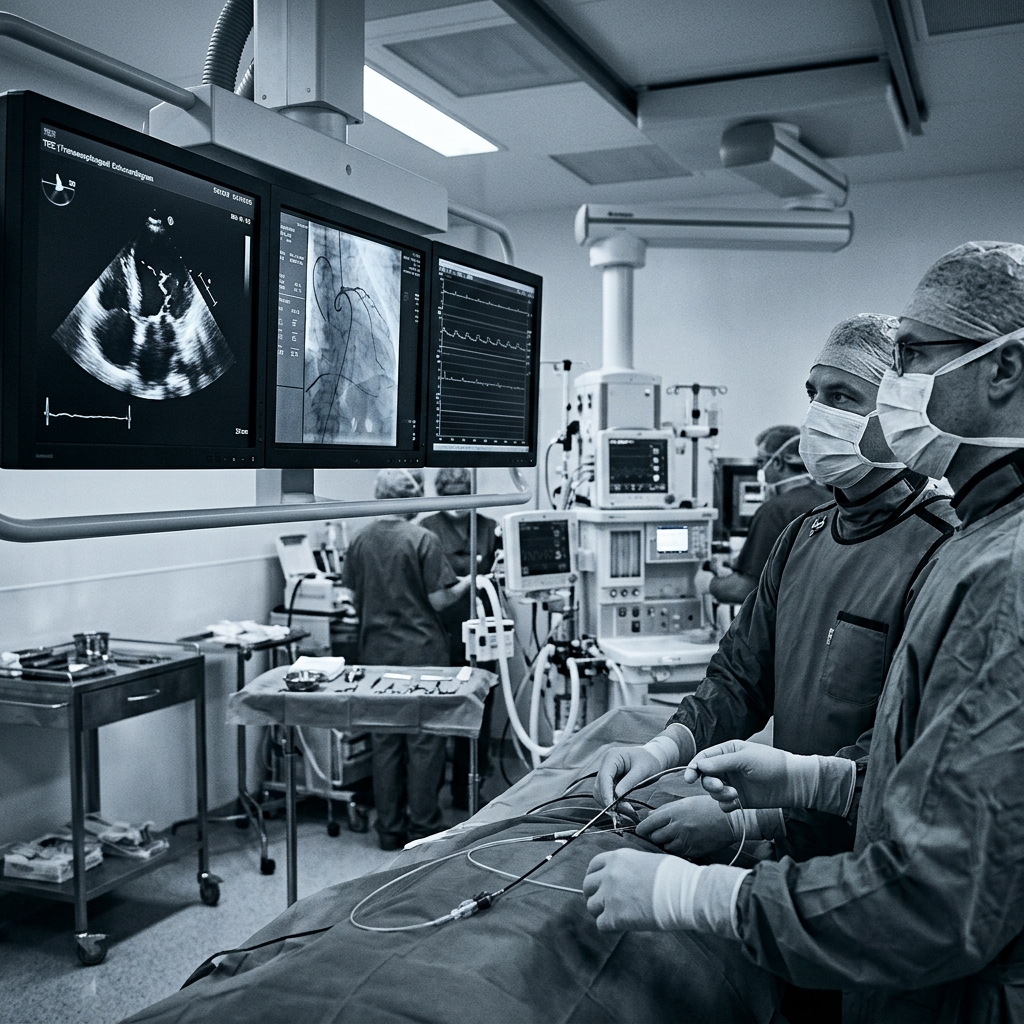
MitraClip
Primary vs functional MR, how the clip works, COAPT trial evidence, echocardiographic guidance, patient selection, and recovery.
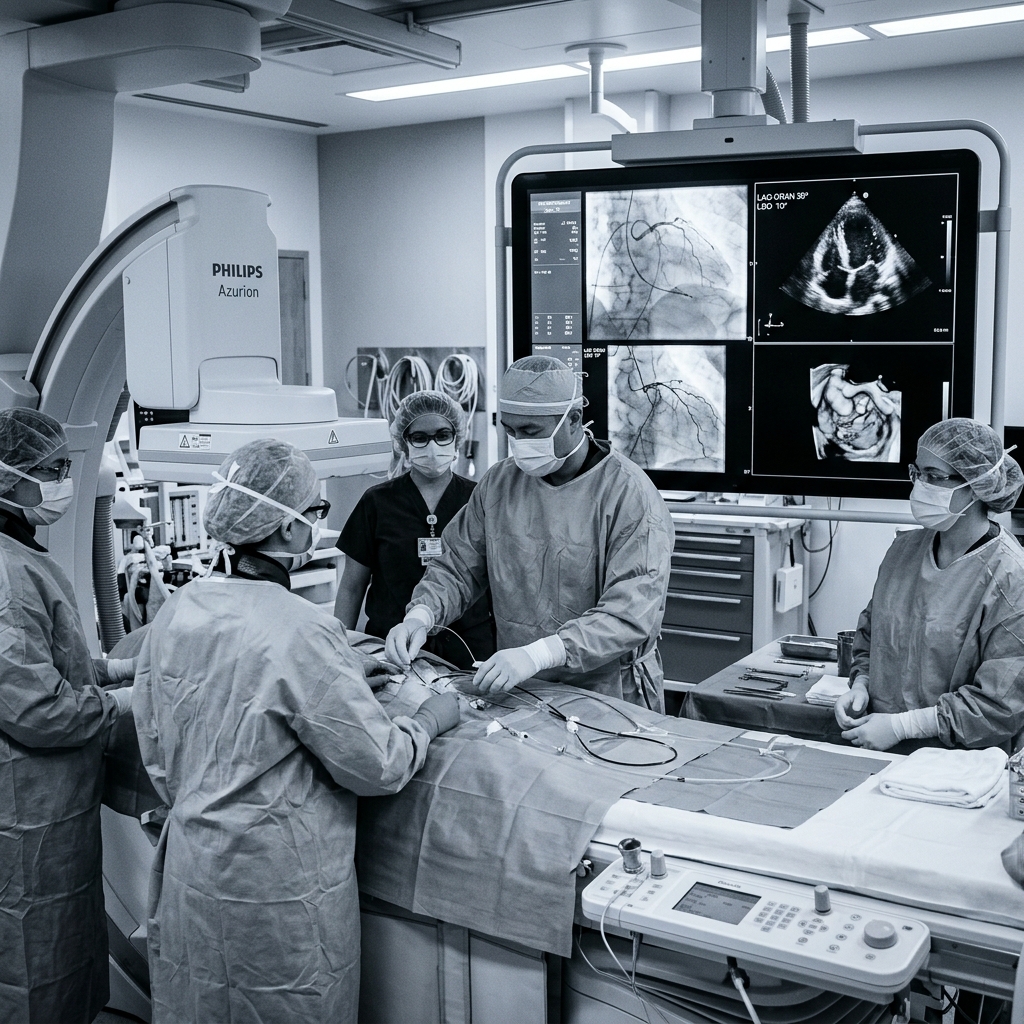
ASD Device Closure
Types of ASD, device types, echo guidance, 95%+ success data, antiplatelet therapy, and what happens if surgical closure is needed instead.
Ready to Consult Dr. Amit Singh?
Schedule a clinical consultation at Heartwise Cardiology Clinic, Sector 17, Vashi or Kokilaben Hospital, Navi Mumbai.
Heartwise in Vashi. Procedures at Kokilaben.
OPD consultations, diagnostics, and patient care at Heartwise Cardiology Clinic, Vashi. Interventional procedures performed at Kokilaben Hospital, Koperkhairne.
Heartwise Clinic — Vashi
Sector 17, Vashi
Comprehensive cardiac OPD, diagnostics and consultations at the Heartwise Cardiology Clinic in Sector 17, Vashi, Navi Mumbai.
Kokilaben Hospital — Koperkhairne
Koperkhairne, Navi Mumbai
Tertiary interventional cardiac procedures — angiography, angioplasty, TAVR, structural interventions and device implantation.
Palava City — Dombivli
Palava, Dombivli
Outreach consultation clinic serving Dombivli, Kalyan and surrounding Palava City catchment.
Deepisha Medical Centre — Ulwe
Ulwe, Navi Mumbai
Cardiac OPD consultation clinic serving Ulwe, Seawoods, Belapur and the Navi Mumbai International Airport catchment.
Serving All Sectors of Navi Mumbai & MMR
Patients routinely visit our Vashi clinic from across Navi Mumbai and the surrounding Mumbai Metropolitan Region.
“Beat Better. Live Wiser.”
Dr. Amit Singh, FACC
Consultant Interventional Cardiologist
Medical Disclaimer: This article has been written and reviewed by Dr. Amit Singh, FACC, for educational purposes only. It does not constitute personalised medical advice and should not be used as a substitute for a consultation with a qualified cardiologist. Individual clinical decisions must be made by a treating physician based on complete medical history and examination. If you are experiencing chest pain, breathlessness, or other cardiac symptoms, seek emergency medical care immediately.