Coronary Angioplasty & Stenting
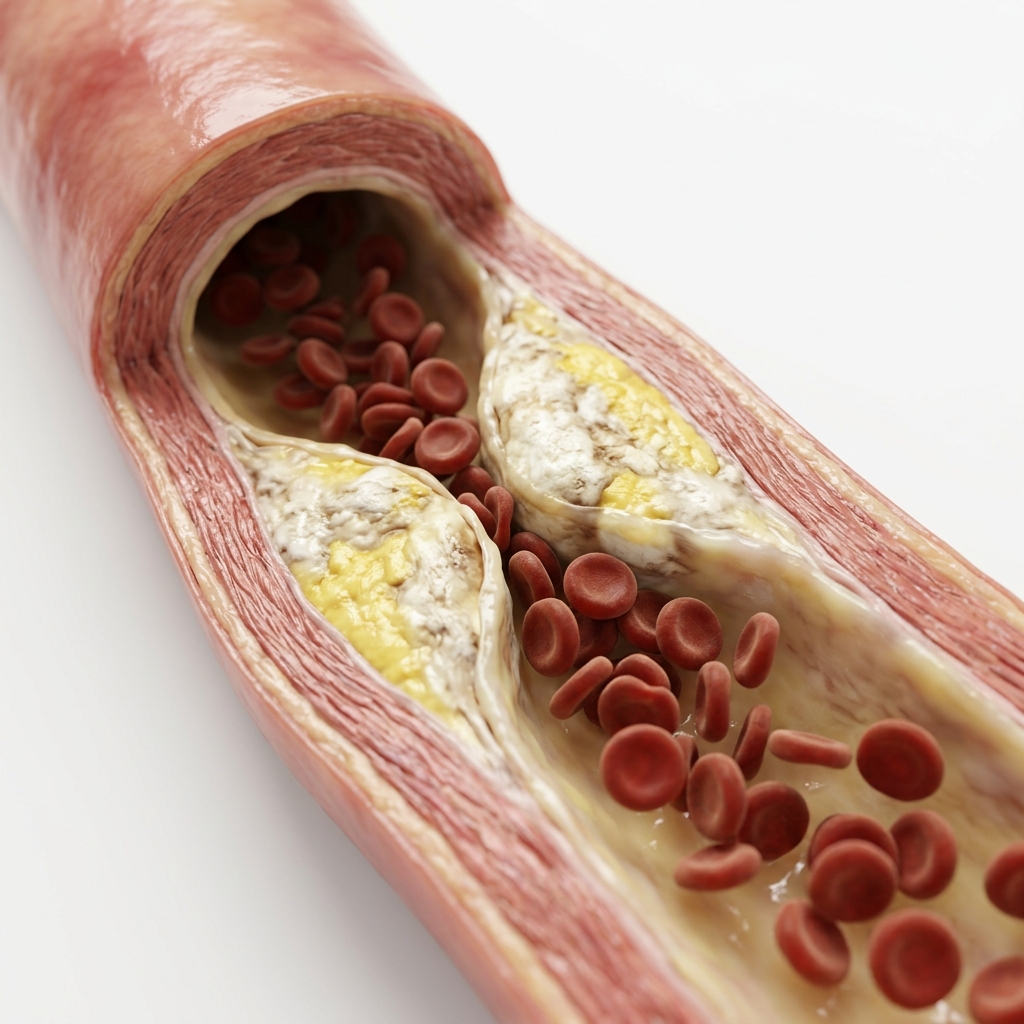
IVUS & OCT-Guided · Radial-First Protocol · Kokilaben Hospital, Koperkhairne. Coronary angioplasty and stenting — also called Percutaneous Coronary Intervention (PCI) — is the primary catheter-based treatment for coronary artery disease: the build-up of atherosclerotic plaque inside the coronary arteries that narrows or blocks blood flow to the heart muscle.
What is Angioplasty & Stenting?
An evidence-based overview of Percutaneous Coronary Intervention (PCI) and the mechanics of drug-eluting stents.
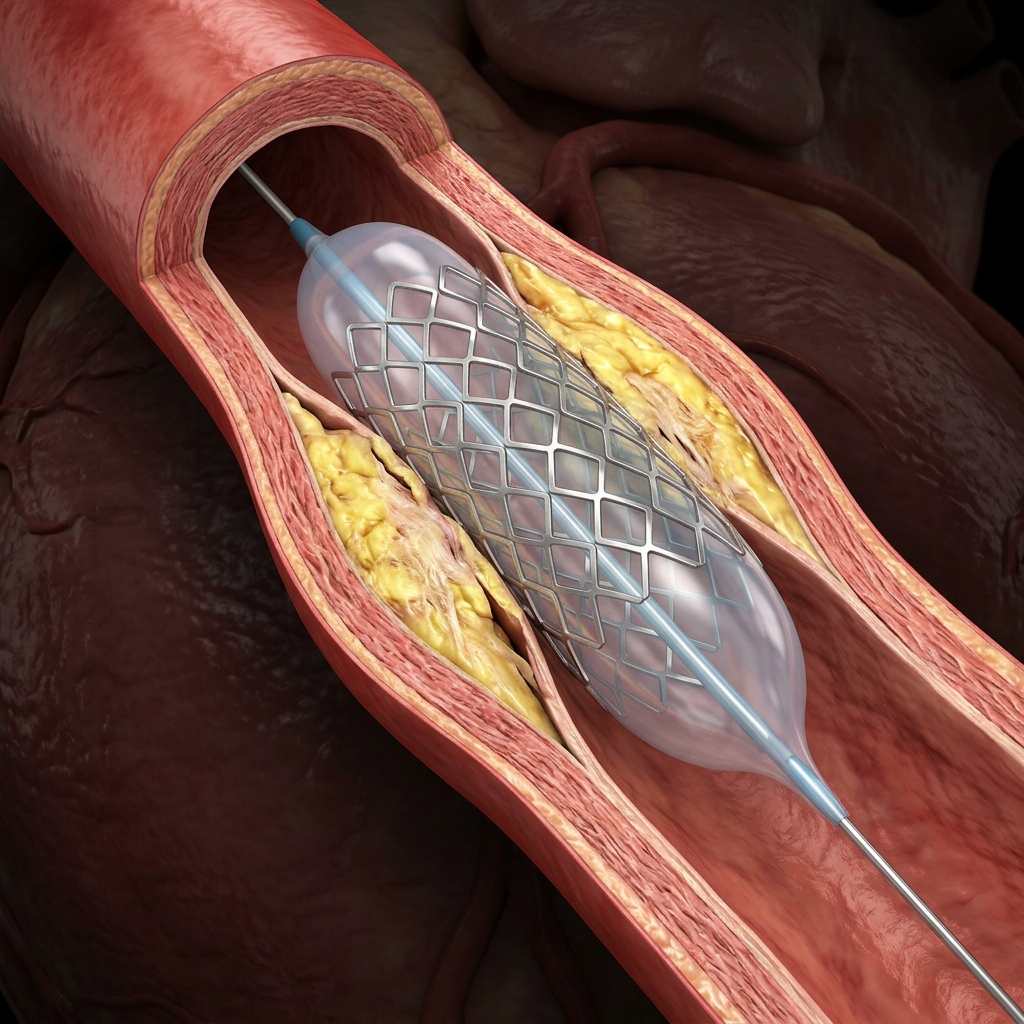
Coronary angioplasty and stenting — formally called Percutaneous Coronary Intervention (PCI) — is the primary catheter-based treatment for coronary artery disease: the build-up of atherosclerotic plaque inside the coronary arteries that narrows or blocks blood flow to the heart muscle. PCI restores that blood flow without open-heart surgery. A deflated balloon catheter is advanced to the blockage, inflated to compress the plaque, and then a drug-eluting stent (a tiny metallic mesh tube coated with medication) is deployed to hold the artery permanently open. Modern drug-eluting stents release anti-proliferative drugs (everolimus, zotarolimus, or sirolimus) over 3–6 months to prevent scar tissue forming inside the stent — reducing the restenosis rate from 20–40% (bare metal stents) to less than 5% at one year. The first decision in any PCI procedure is vascular access — the route used to introduce the catheter into the arterial system. The procedure is performed in a Cardiac Catheterisation Laboratory (Cath Lab) under local anaesthesia and mild sedation, typically via the transradial approach — accessing the radial artery at the wrist rather than the traditional femoral artery in the groin. This allows patients to sit up and move immediately after the procedure, with most discharged the same day. When angioplasty is NOT the right answer: For complex three-vessel disease with high SYNTAX score, or left main disease with certain anatomy, coronary artery bypass grafting (CABG) may produce better long-term outcomes. Dr. Amit Singh makes this recommendation transparently when the evidence supports it — even if it means referring the patient for surgery rather than performing angioplasty.
Clinical Indications & Urgency Profiles
Understanding when coronary angioplasty is indicated based on symptom acuity and lesion characteristics.
| Clinical Situation | Urgency Level |
|---|---|
| Heart attack (STEMI) — blocked artery causing active heart attack | Emergency |
| NSTEMI / Unstable angina — critical unstable blockage | Urgent (24–72 hr) |
| Stable angina with significant stenosis (>70%) on angiography | Elective |
| Positive TMT / nuclear stress test with significant ischaemia | Elective |
| FFR ≤ 0.80 on functional testing of intermediate lesion (50–70%) | Elective |
| Left main artery disease (selected patients vs CABG) | Urgent / Elective |
| Restenosis inside a previous stent (in-stent restenosis) | Elective |
How indications are refined in complex disease: Fractional flow reserve and the SYNTAX score work as complementary tools at different levels. FFR resolves functional significance at the individual lesion level — a value of ≤0.80 confirms a lesion is haemodynamically significant and supports proceeding with stenting, while a higher value supports deferral. The SYNTAX score, by contrast, evaluates the overall anatomical complexity of multi-vessel disease to guide the broader revascularisation strategy: a score of ≤22 (low complexity) generally favours angioplasty, 23–32 (intermediate) is individualised, and ≥33 (high complexity) — or left main disease with unfavourable anatomy — typically favours coronary artery bypass grafting (CABG). Dr. Amit Singh makes this recommendation transparently when the evidence supports it — even if it means referring the patient for surgery rather than performing angioplasty.
IVUS & OCT Guidance: Evidence-Based Medicine
Standard angiography only provides a 2D shadow of the vessel. Intravascular ultrasound (IVUS) and Optical Coherence Tomography (OCT) inspect the arterial walls from the inside, confirming flawless stent positioning and sizing.
IVUS-guided drug-eluting stent placement vs standard angiography-guided PCI for complex coronary lesions.
Reduction in major adverse cardiac events (MACE) at 3 years with IVUS guidanceOCT-guided PCI versus angiography-guided PCI for complex lesions in an all-comers randomised trial.
2-year MACE with OCT guidance vs 2.69% with angiography guidanceOCT-guided PCI versus angiography-guided PCI specifically for bifurcation coronary lesions.
Relative reduction in 2-year MACE with OCT-guided bifurcation PCIComplex PCI: Rotablation, IVL & CTO
The full therapeutic spectrum of advanced coronary interventions, designed for highly calcified blockages, branching vessels, and chronic total occlusions.
Calcified Coronary Lesions
01Coronary calcification — calcium deposits embedded within atherosclerotic plaque — is one of the most significant barriers to successful stenting. Severely calcified arteries cannot be adequately dilated with standard balloon angioplasty alone: the calcium resists the balloon's expansion force, preventing full stent deployment and increasing the risk of under-expansion. Intravascular Lithotripsy (IVL) uses pulsatile sonic pressure waves to fracture calcium from inside the vessel, enabling stent deployment. Rotational atherectomy (Rotablation) uses a diamond-tipped burr to ablate calcified plaque.
Bifurcation PCI
02Bifurcation lesions involve a blockage at the junction where a main coronary artery divides into a branch. Treating bifurcations requires specific stenting strategies — provisional T-stenting, DK-Crush, or Culotte techniques — to maintain flow in both the main vessel and the branch. OCT guidance is particularly valuable to confirm final result.
Left Main Coronary PCI
03The left main coronary artery supplies 70–80% of the heart muscle's blood supply. Left main disease historically required bypass surgery (CABG). The EXCEL trial established that in selected patients with low-to-intermediate SYNTAX scores, left main PCI achieves comparable outcomes to CABG at 5 years.
Chronic Total Occlusion (CTO)
04A Chronic Total Occlusion is a coronary artery that has been completely blocked for over 3 months. CTOs are the most technically challenging lesions in interventional cardiology. CTO PCI uses antegrade and retrograde wire crossing strategies to re-canalise the vessel.
Multi-Vessel PCI
05In patients with multiple significant blockages — two or three vessels simultaneously — a decision must be made about whether to treat all vessels or only the culprit lesion. FFR (Fractional Flow Reserve) guidance is essential: the FAME 2 trial established that treating only FFR-positive lesions produces better outcomes.
In-Stent Restenosis (ISR)
06In-stent restenosis occurs when scar tissue grows inside a previously placed stent, re-narrowing the vessel. OCT is the imaging tool of choice for ISR evaluation — identifying whether the mechanism is under-expansion, neointimal hyperplasia, or neoatherosclerosis — which determines the correct therapeutic strategy.
Drug-Eluting Stents: Which & Why
Detailed comparison of second-generation drug-eluting stents (DES) used across clinical scenarios.
Everolimus-Eluting Stent
Everolimus (mTOR inhibitor)
Technical Specs
- •Restenosis rate: <5% at 1 yr
- •DAPT duration: 6–12 months
- •Stent thrombosis: <0.5% / year
Zotarolimus-Eluting Stent
Zotarolimus (mTOR inhibitor)
Technical Specs
- •Restenosis rate: <5% at 1 yr
- •DAPT — high bleed risk: 1 month possible
- •Stent thrombosis: <0.6% / year
Sirolimus-Eluting Stent
Sirolimus (mTOR inhibitor)
Technical Specs
- •Restenosis rate: <5% at 1 yr
- •Strut thickness: 60–80 µm
- •Stent thrombosis: <0.5% / year
How to Prepare for Angioplasty
Critical guidelines to follow during the days leading up to your cardiac catheterisation procedure.
What Happens During Angioplasty?
Detailed workflow of your intervention — from local anaesthesia to final imaging confirmation. The procedural workflow below outlines each step in sequence, from vascular access to recovery. Duration: 45–90 minutes (simple cases); 90–150 minutes (complex cases).
Vascular Access (Transradial Approach)
Local anaesthetic at the wrist. Radial artery puncture with a small needle establishes vascular access. A 6Fr or 7Fr sheath is placed to provide access. IV heparin (anticoagulation) is administered. Continuous ECG and BP monitoring throughout.
Diagnostic Angiography
If not already done, coronary angiography is performed first to confirm the target lesion, assess other vessels, and plan the intervention. SYNTAX score is calculated for complex multi-vessel cases.
Guidewire Crossing
A coronary guidewire (0.014") is advanced through the guide catheter and across the blockage into the distal vessel. This is the most critical technical step — the wire must cross safely without perforating the vessel.
Pre-dilation (Balloon Angioplasty)
Balloon angioplasty is the mechanical foundation of PCI: a semi-compliant balloon catheter is advanced to the lesion and inflated at 8–14 atmospheres to compress the plaque and prepare the vessel for stenting. Severe coronary calcification can impede adequate balloon expansion — in these cases, IVL or rotational atherectomy is performed at this stage before stenting proceeds.
IVUS / OCT Imaging (Pre-stent)
An IVUS or OCT catheter is advanced to the lesion to measure the true vessel diameter, assess plaque characteristics, and determine optimal stent length and diameter. This step eliminates guesswork from stent sizing.
Stent Deployment
The appropriately sized drug-eluting stent is advanced to the lesion and deployed at high pressure (typically 12–16 atmospheres). The stent expands and is left permanently in the artery.
Post-dilation & IVUS/OCT Confirmation
A non-compliant balloon post-dilates the stent to ensure complete expansion. Final IVUS or OCT imaging confirms optimal stent apposition, full expansion, and absence of edge dissection or under-expansion.
Sheath Removal & Recovery
The sheath is removed. A wrist compression band is applied for 2–3 hours. The patient is monitored in the recovery area. Results and next steps are discussed with the patient and family within 1–2 hours.
Benefits & Risks of Coronary Angioplasty
A scientific, transparent perspective on procedural outcomes and safety profiles.
Core Clinical Benefits
- Immediate relief of angina (chest pain) in >90% of patients with significant stenosis
- Reduces risk of future heart attack in haemodynamically significant lesions (FAME 2 trial)
- No open-chest surgery — no sternotomy, no general anaesthesia, minimal discomfort
- Radial approach: fully ambulatory within 1–2 hours, same-day discharge possible
- Procedure completed in 45–90 minutes in most cases
- Drug-eluting stents: <5% restenosis rate — durable, highly reliable long-term result
- Life-saving in heart attack (STEMI) — every 30 minutes saved reduces patient mortality
- IVUS/OCT guidance: reduces need for repeat procedures by 25% or more
Potential Risks & Incidence
- Contrast nephropathy: <1% with adequate hydration and modern low-osmolar contrast
- Access-site bleeding: <1–2% with radial approach (vs 3–5% femoral)
- Coronary artery dissection: rare (<0.1%); usually managed with immediate additional stenting
- Acute stent thrombosis: <0.5% / year; risk highest if DAPT stopped early
- Stroke: <0.1% for elective PCI at experienced centres
- Emergency CABG: <0.1% (very rare with modern interventional techniques)
- Death: <0.1% for elective PCI; higher in emergency heart attack setting
- Stent restenosis: <5% at 1 year with DES; managed with DCB or repeat stenting
Recovery & DAPT Guidelines
Standard timeline for recovery and the critical importance of Dual Antiplatelet Therapy (DAPT) in preventing stent thrombosis.
Stent Thrombosis vs In-Stent Restenosis
- Stent thrombosis is a sudden, acute blood clot forming inside the stent — often presenting as a new heart attack — and is the complication DAPT specifically prevents. In-stent restenosis is a gradual, months-to-years process where scar tissue slowly re-narrows the vessel inside the stent, typically presenting as recurrent angina rather than a sudden event. The two are distinguished by both timing and mechanism: thrombosis is a clotting failure, restenosis is a healing-response failure.
| Recovery Stage | Clinical Expectations |
|---|---|
| First 2–4 hours | Monitored in recovery. Wrist band removed. Can sit, eat, drink. Cardiologist visits to discuss results. |
| Same day / Day 1 | Most elective radial-approach PCI patients discharged same day or Day 1. IV line removed. Wrist may be mildly sore. |
| First 48 hours | No driving. Keep wrist dry. Avoid heavy lifting with access arm. Light activity permitted. |
| Days 3–5 | Most patients return to desk work. Mild fatigue is normal. Continue all medications. |
| 2–4 weeks | Gradually resume normal physical activity. Cardiac rehabilitation referral if appropriate. |
| 1 month | First follow-up review. DAPT compliance confirmed. ECG, BP, and symptoms reviewed. |
| 3–6 months | Review of risk factors. Statin dose optimisation. Stress test may be considered if symptomatic. |
| Annual | Long-term cardiology follow-up. Medication review. Risk factor management. Repeat imaging if indicated. |
IVUS vs OCT vs Angiography
Comparison of intravascular imaging modalities for optimal stent deployment guidance.
| Feature | IVUS | OCT | Angiography Alone |
|---|---|---|---|
| Resolution | 150 µm | 10–15 µm | 200 µm (2D only) |
| Depth | Complete vessel wall | 1–2 mm intima | Lumen silhouette |
| Calcium assessment | +++ (good penetration) | ++ (surface only) | — (not visible) |
| Stent apposition | +++ | +++ | Limited |
| Dissection detection | ++ | +++ | + |
| Cost | Moderate | Higher | Lowest |
Post-PCI Outcome Assessment
Interpretation of procedural results after coronary angioplasty and stenting.
| Parameter | Target | Meaning |
|---|---|---|
| TIMI flow grade | 3 (normal) | Complete reperfusion; TIMI <3 indicates suboptimal result |
| Myocardial blush grade | 2–3 | Good tissue-level perfusion; persistent blush suggests microvascular obstruction |
| Stent expansion (IVUS) | >80% of reference | Optimal expansion reduces restenosis and stent thrombosis |
| Stent apposition (OCT) | Complete | Malapposition >0.4mm requires post-dilation |
| Edge dissection (OCT) | None | Major dissection (>60° arc or >2mm length) needs additional stenting |
| FFR after stenting | >0.90 | Physiologically excellent result; <0.85 indicates residual ischaemia |
Frequently Asked Questions
Detailed, peer-reviewed answers to the most common patient concerns regarding stenting and long-term care.
01Is coronary angioplasty better than bypass surgery?
For most single-vessel or two-vessel coronary artery disease, angioplasty with drug-eluting stenting is preferred over bypass surgery — it is less invasive, has a shorter recovery, and achieves equivalent outcomes for most patients. For complex three-vessel disease or left main disease, the SYNTAX and EXCEL trials show bypass surgery may offer better long-term results in selected patients with high SYNTAX scores. The decision is individualised — Dr. Amit Singh will recommend the option the evidence supports for your specific anatomy.
02What is IVUS-guided angioplasty and why does it matter?
IVUS (Intravascular Ultrasound) places a miniature ultrasound probe inside the coronary artery to visualise the vessel wall in cross-section during the procedure. This allows the cardiologist to correctly size the stent, confirm complete expansion, and detect complications invisible on plain angiography. The RENOVATE trial (NEJM 2023, 1,639 patients) demonstrated IVUS-guided PCI reduces major adverse cardiac events by 25% versus angiography-guided PCI alone. Dr. Amit Singh uses IVUS or OCT guidance routinely at Kokilaben Hospital, Koperkhairne.
03How long does a coronary stent last?
A coronary stent is a permanent metallic implant — it stays in the artery for life and does not need replacement. Modern drug-eluting stents have a restenosis (re-narrowing) rate of less than 5% at one year, compared to 20–40% for older bare-metal stents. With proper dual antiplatelet therapy and cardiovascular risk factor control (statins, blood pressure management, diabetes control, smoking cessation), most patients do not require repeat intervention in the stented segment.
04What is dual antiplatelet therapy (DAPT) and how long must I take it?
DAPT means taking two antiplatelet medications simultaneously — aspirin plus clopidogrel, ticagrelor, or prasugrel. After drug-eluting stent placement, ACC/AHA guidelines recommend 6–12 months of DAPT for stable coronary artery disease and 12 months after a heart attack. DAPT prevents blood clots from forming on the stent while it heals. Never stop DAPT early without consulting your cardiologist — premature cessation is the leading cause of acute stent thrombosis, a serious complication.
05How long is recovery after coronary angioplasty?
After radial-approach coronary angioplasty, most patients are mobile within 1–2 hours and discharged the same day or after an overnight stay. Avoid heavy lifting and strenuous exercise for 1–2 weeks. Return to desk work is typically possible within 3–5 days. Driving is permitted after 24–48 hours. Full physical activity is resumed within 2–4 weeks. Follow-up is at 1 month, 3 months, and annually.
06Can angioplasty be done in diabetic patients?
Yes — coronary angioplasty is safe and effective in diabetic patients. Diabetic patients often have more calcified and diffuse coronary disease, requiring advanced techniques such as IVUS/OCT guidance, intravascular lithotripsy (IVL), or rotational atherectomy. Modern everolimus-eluting stents perform well in diabetic vasculature. Metformin should be stopped 24–48 hours before and restarted 48 hours after the procedure, once kidney function is confirmed stable.
07Is coronary angioplasty covered by health insurance in India?
Yes. Coronary angioplasty and stenting is a listed procedure covered by most Indian health insurance policies, including cashless treatment. CGHS, ECHS, and Ayushman Bharat PM-JAY cover the procedure for eligible patients at Kokilaben Dhirubhai Ambani Hospital, Koperkhairne. Most private health insurers (Star Health, New India, ICICI Lombard, HDFC Ergo) also provide coverage. Pre-authorisation from your insurer is typically required before the procedure. Contact Heartwise Cardiology on 9769517636 for insurance guidance.
08Is coronary angioplasty safe?
Coronary angioplasty is a safe, routinely performed procedure with a major complication rate of less than 1% at experienced centres. Stroke risk is less than 0.1%. Emergency surgery is required in less than 0.1% of cases. The procedure is performed in a dedicated Cardiac Catheterisation Laboratory at Kokilaben Hospital, Koperkhairne, with continuous monitoring, full resuscitation equipment, and an experienced interventional cardiology team. The radial (wrist) access approach reduces access-site bleeding by 73% compared to femoral access (RIVAL trial).
09What is the SYNTAX score and how does it determine treatment?
The SYNTAX score quantifies the anatomical complexity of coronary artery disease by weighting the number, location, and morphological characteristics of each coronary lesion. A score of 22 or below (low complexity) generally favours coronary angioplasty and stenting. A score of 23–32 (intermediate complexity) is individualised based on additional clinical factors. A score of 33 or above (high complexity) typically indicates that coronary artery bypass grafting (CABG) is likely to produce superior long-term outcomes. The SYNTAX score works alongside fractional flow reserve (FFR): FFR determines whether an individual lesion is significant enough to treat, while the SYNTAX score determines the overall revascularisation strategy.
10Is stent thrombosis the same as in-stent restenosis?
No — they are distinct complications with different timing and mechanisms. Stent thrombosis is a sudden, acute blood clot forming inside the stent, often presenting as a new heart attack; it is the complication that dual antiplatelet therapy (DAPT) is specifically designed to prevent. In-stent restenosis is a gradual process, occurring over months to years, where scar tissue slowly re-narrows the vessel inside the stent — typically presenting as recurrent angina rather than a sudden event. Stent thrombosis is a clotting failure; restenosis is a healing-response failure.
“Precision in structural interventions. Excellence in clinical outcomes.”
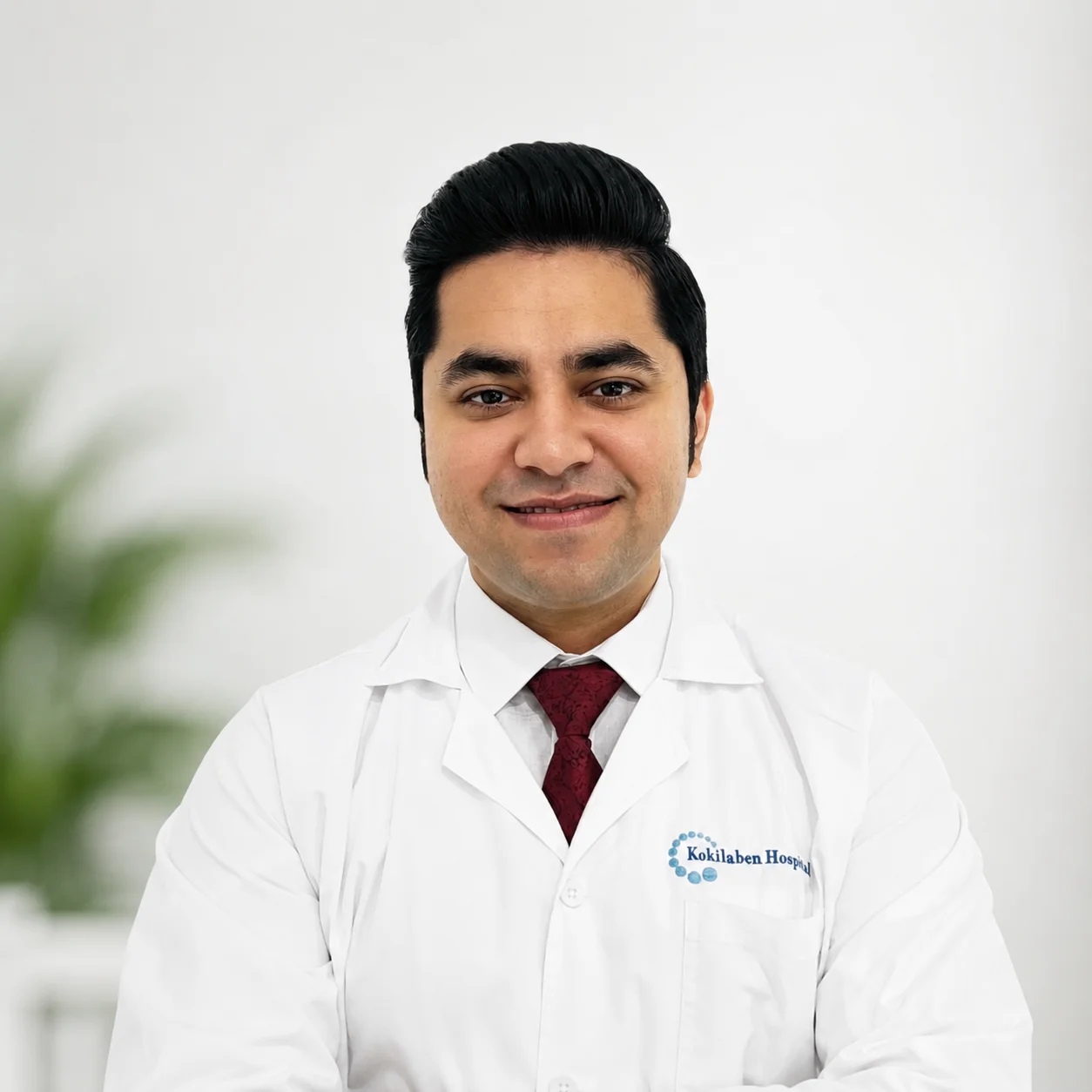
Dr. Amit Singh, FACC
Consultant Interventional Cardiologist
Cardiac Services Available at Heartwise
Dr. Amit Singh offers comprehensive cardiac diagnostics and management at Heartwise Cardiology Clinic, Vashi.
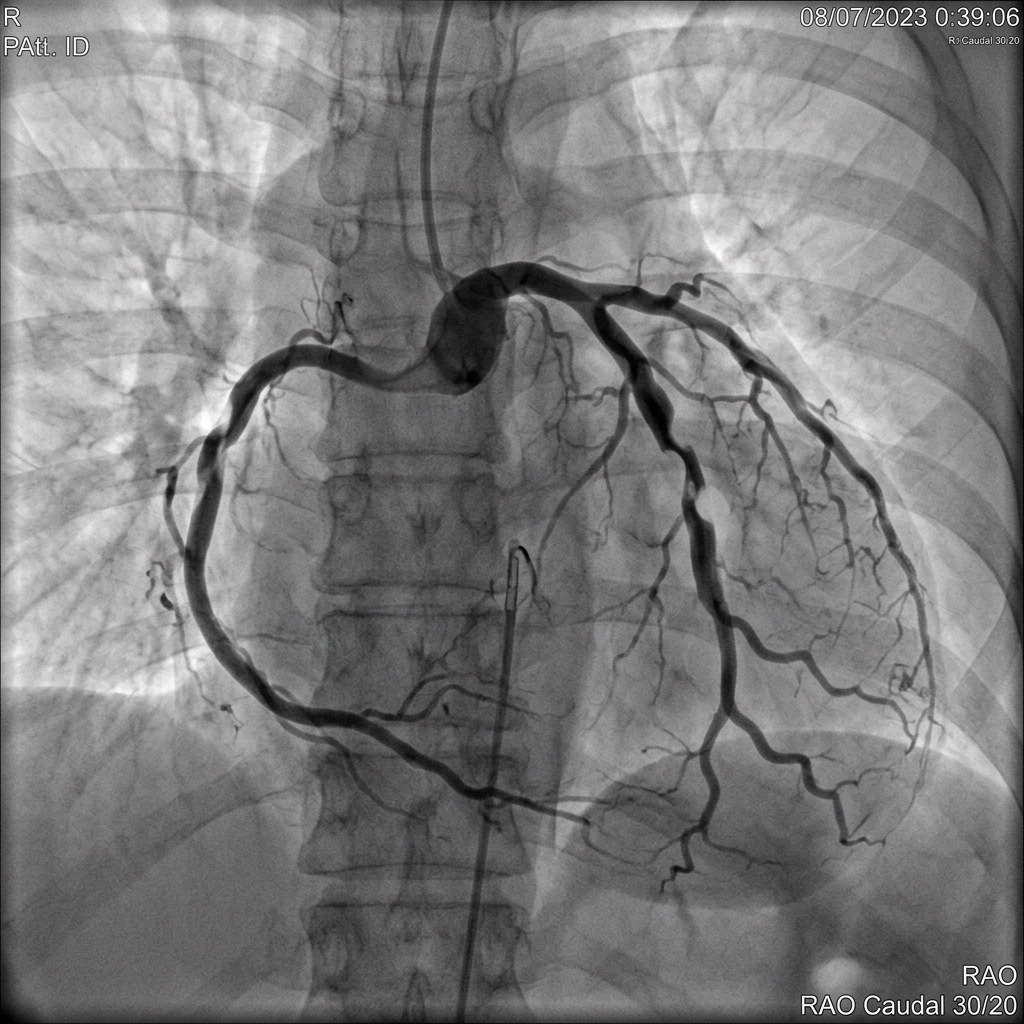
Coronary Angiography
Diagnostic coronary angiography with FFR and IVUS guidance.

Treadmill Stress Test
Exercise ECG to assess ischaemia before and after angioplasty.
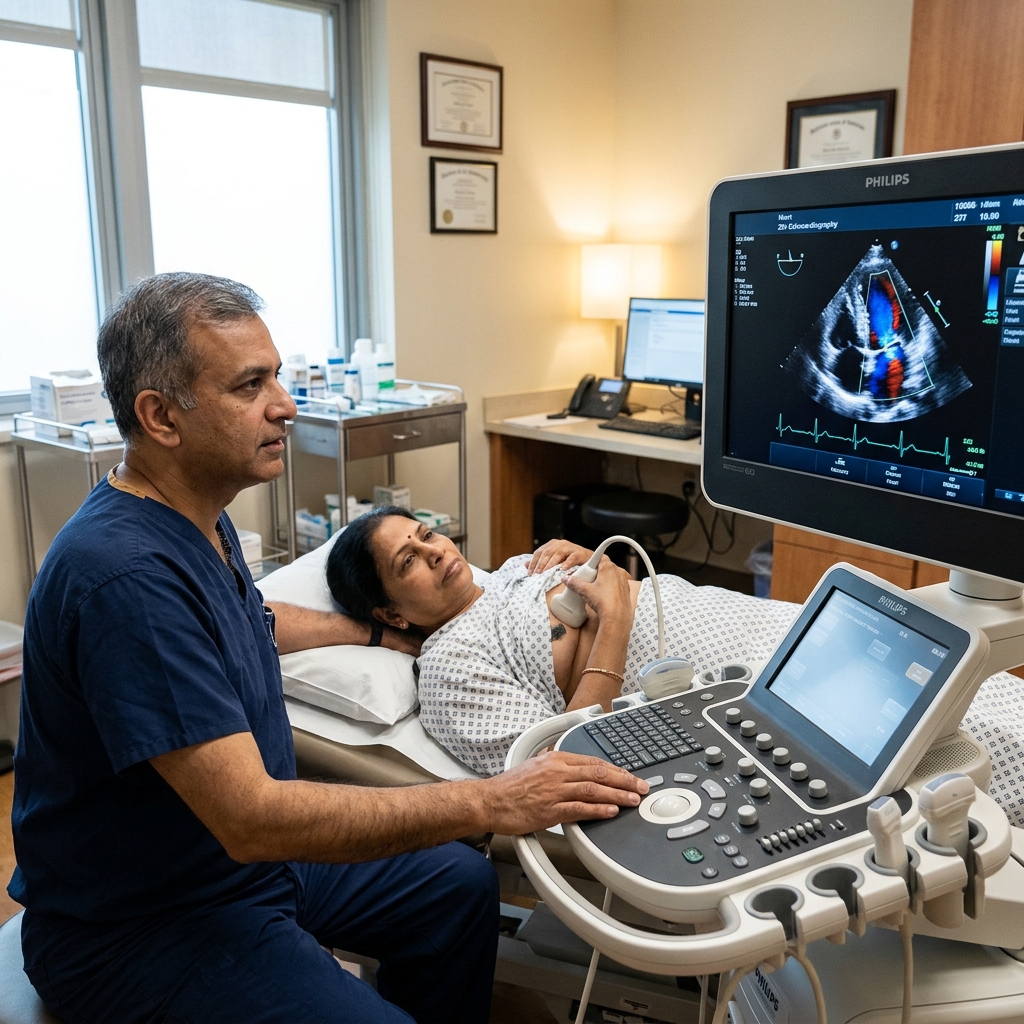
2D Echocardiography
Post-angioplasty LV function assessment and wall motion evaluation.
Coronary Artery Disease
CAD diagnosis, medical management, and revascularisation planning.
Ready to Consult Dr. Amit Singh?
Schedule a clinical consultation at Heartwise Cardiology Clinic, Sector 17, Vashi or Kokilaben Hospital, Navi Mumbai.
Heartwise in Vashi. Procedures at Kokilaben.
OPD consultations, diagnostics, and patient care at Heartwise Cardiology Clinic, Vashi. Interventional procedures performed at Kokilaben Hospital, Koperkhairne.
Heartwise Clinic — Vashi
Sector 17, Vashi
Comprehensive cardiac OPD, diagnostics and consultations at the Heartwise Cardiology Clinic in Sector 17, Vashi, Navi Mumbai.
Kokilaben Hospital — Koperkhairne
Koperkhairne, Navi Mumbai
Tertiary interventional cardiac procedures — angiography, angioplasty, TAVR, structural interventions and device implantation.
Palava City — Dombivli
Palava, Dombivli
Outreach consultation clinic serving Dombivli, Kalyan and surrounding Palava City catchment.
Deepisha Medical Centre — Ulwe
Ulwe, Navi Mumbai
Cardiac OPD consultation clinic serving Ulwe, Seawoods, Belapur and the Navi Mumbai International Airport catchment.
Serving All Sectors of Navi Mumbai & MMR
Patients routinely visit our Vashi clinic from across Navi Mumbai and the surrounding Mumbai Metropolitan Region.
“Beat Better. Live Wiser.”
Dr. Amit Singh, FACC
Consultant Interventional Cardiologist
Medical Disclaimer: This article has been written and reviewed by Dr. Amit Singh, FACC, for educational purposes only. It does not constitute personalised medical advice and should not be used as a substitute for a consultation with a qualified cardiologist. Individual clinical decisions must be made by a treating physician based on complete medical history and examination. If you are experiencing chest pain, breathlessness, or other cardiac symptoms, seek emergency medical care immediately.