Coronary Angiography: What To Expect From Your Procedure

If your cardiologist has recommended a coronary angiography, you probably have questions — about what the test involves, how long it takes, and whether it carries serious risks. That concern is completely normal. Coronary angiography is one of the most reliable diagnostic procedures in cardiology, giving your doctor a direct, real-time view of the blood flow through your heart's arteries. In this guide, I walk you through every step — preparation, the procedure itself, recovery, and results — so you know exactly what to expect. As an interventional cardiologist — FACC and triple ESC-certified — with over 15 years of experience and more than 12,000 patients treated, I perform coronary angiography routinely at Kokilaben Dhirubhai Ambani Hospital, Koperkhairne, Navi Mumbai. My goal here is to give you the same clear, practical information I share with patients in my clinic.
What Is Coronary Angiography?
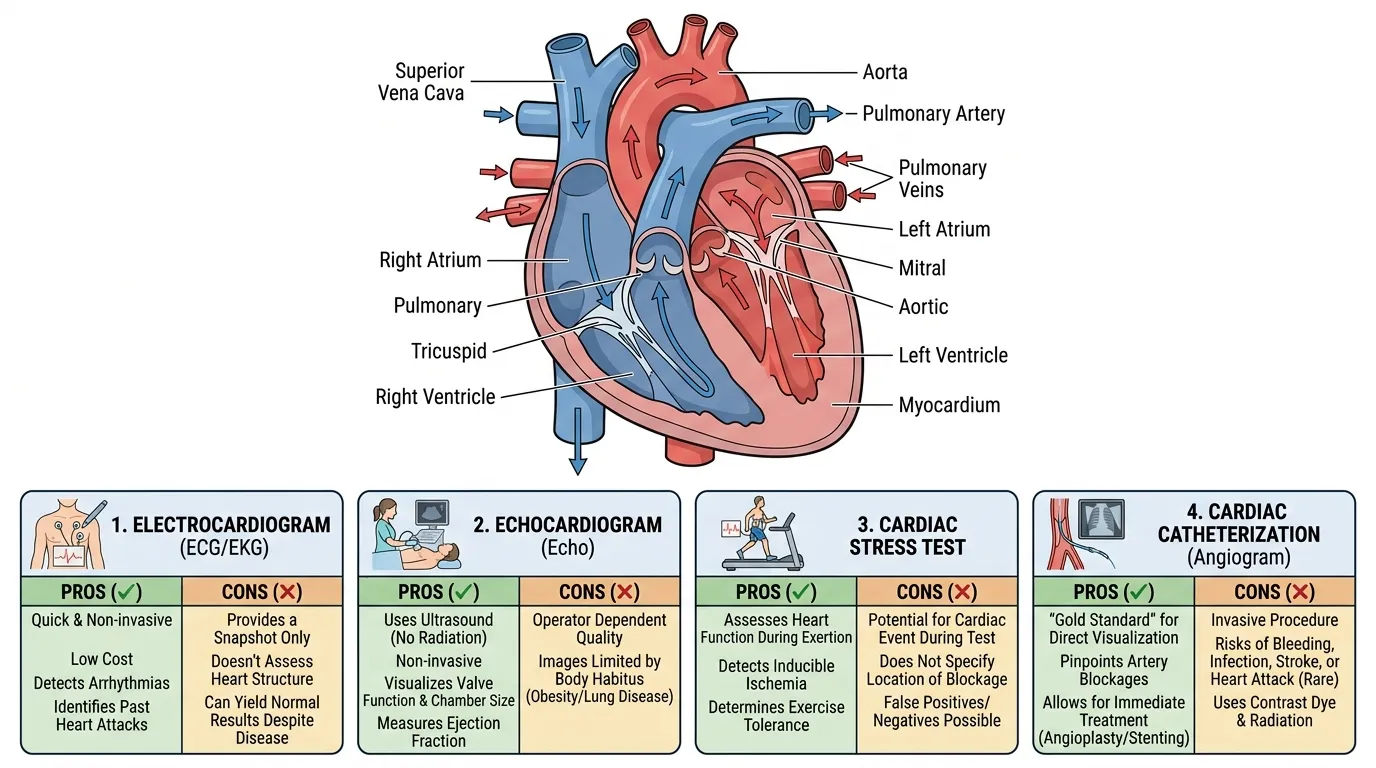
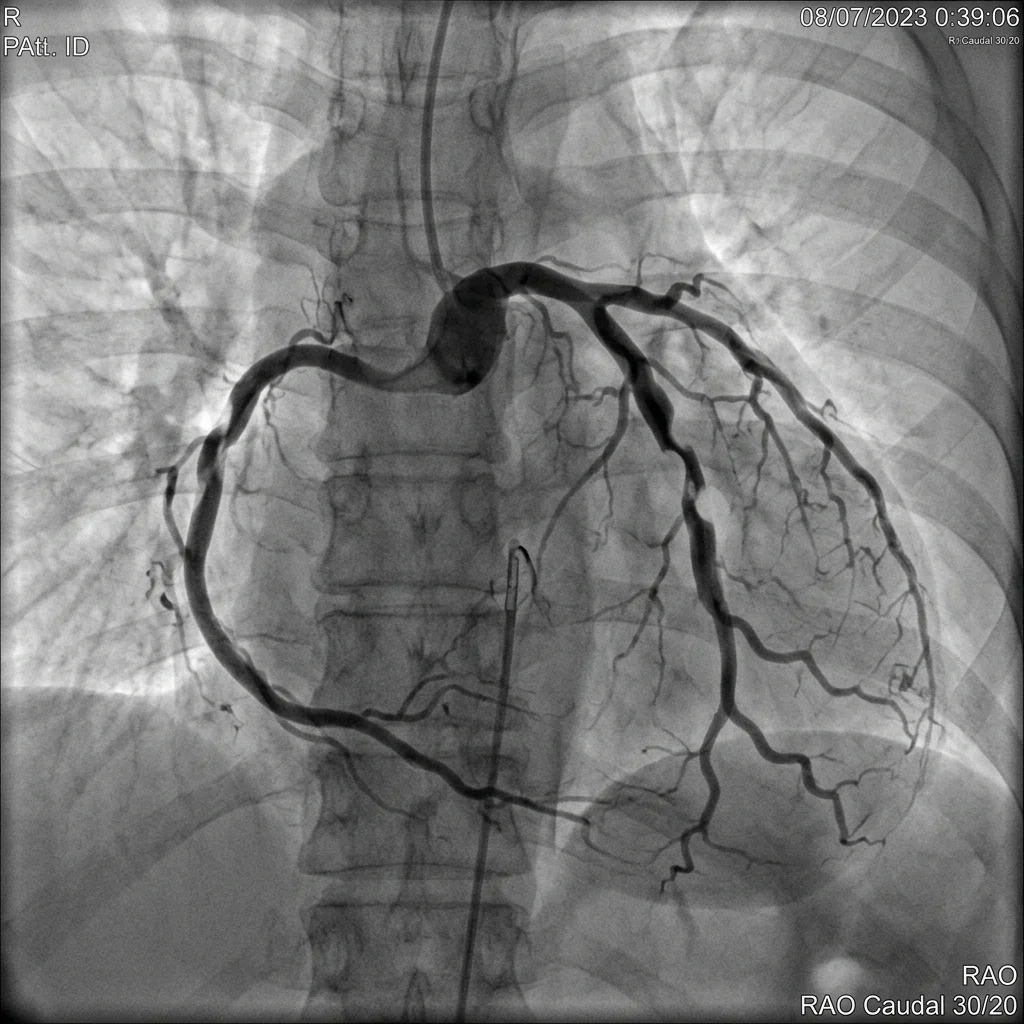
Coronary angiography is a diagnostic procedure that uses X-ray imaging and a special contrast dye to visualise blood flow through your coronary arteries — the vessels that supply oxygen-rich blood to your heart muscle. Cardiologists perform it as part of a broader process called cardiac catheterisation, where a thin, flexible tube (catheter) is guided through a blood vessel to reach your heart.
The purpose is straightforward: to detect narrowing or blockages in your coronary arteries, a condition called coronary artery disease (CAD) that I see and treat regularly. If a blockage is found, your cardiologist can see its exact location, severity, and extent — information that directly shapes your treatment plan.
You may have heard of CT coronary angiography — a non-invasive scan that also images the coronary arteries. While CT angiography is useful for screening, it cannot treat a blockage. Conventional coronary angiography allows your doctor to move directly from diagnosis to treatment — such as angioplasty and stenting — during the same session.
When Is Coronary Angiography Recommended?
Common Reasons Your Doctor May Recommend It
Your cardiologist may recommend coronary angiography for several clinical reasons:
Chest pain (angina) that is new, worsening, or unexplained by other tests
An abnormal stress test or ECG suggesting reduced blood flow to your heart
Heart valve disease requiring surgical planning
After a heart attack to identify which arteries are affected
Heart failure evaluation when the underlying cause needs to be identified
Pre-operative cardiac clearance before major non-cardiac surgery in high-risk patients
When You May Not Need It
Not every patient with chest discomfort needs an angiogram. At Heartwise, I follow a clear principle: no unnecessary procedures. Non-invasive tests — a stress test, echocardiogram, or ECG — should come first. Coronary angiography is recommended only when these initial tests raise a genuine concern, or when the clinical picture strongly suggests coronary artery disease that needs direct visualisation.
If your doctor has recommended an angiogram, ask what the non-invasive tests showed and why the next step is catheterisation. A responsible cardiologist will explain the reasoning clearly.
How To Prepare For Coronary Angiography
Preparation is straightforward, but a few steps matter:
Fast for 6–8 hours before the procedure. Your doctor will tell you when to stop eating and drinking.
Review your medications with your cardiologist. Blood thinners, diabetes medications, and certain other drugs (including sildenafil) may need to be adjusted or paused.
Inform your doctor about allergies, especially any previous reaction to contrast dye or iodine.
Arrange transportation home. You will not be able to drive yourself after the procedure due to sedation.
Wear comfortable, loose clothing. You will change into a hospital gown, but comfort matters for the trip home.
Bring a list of your current medications and any recent test reports.
What Happens During The Procedure
Step-By-Step Breakdown
Here is what happens from the time you arrive at the catheterisation lab:
You change into a hospital gown and lie on an X-ray table.
A nurse places an intravenous (IV) line and gives you mild sedation — you stay awake but feel relaxed.
We attach ECG electrodes to monitor your heart rhythm throughout.
I apply local anaesthesia to numb the access site (your wrist or groin).
I make a small incision and insert the catheter into a blood vessel.
Using fluoroscopy (live X-ray), I guide the catheter through the blood vessel to your coronary arteries.
I inject contrast dye through the catheter. You may feel a brief warm or flushing sensation — this is normal and passes quickly.
The X-ray machine captures images (angiograms) showing your coronary arteries in detail.
If I find a significant blockage, I may proceed with angioplasty and stenting during the same session.
I remove the catheter and seal the access site with a compression band or closure device.
The Radial-First Approach: A Safer Access Route
At Heartwise, I use the Radial-First Protocol — performing coronary angiography through the radial artery at your wrist rather than the femoral artery at your groin. This is the approach I use as the default for the vast majority of patients, and it offers clear advantages:
73% lower risk of major bleeding compared to femoral (groin) access
Same-day discharge in most cases — you do not need to stay overnight
Immediate mobilisation — you can sit up and walk shortly after the procedure, with no need to lie flat for hours
Greater comfort — patients consistently report less post-procedure discomfort with wrist access
The ACC/AHA and ESC 2023 guidelines recommend radial access as the preferred strategy for coronary angiography and intervention. I adopted this approach because the evidence is clear: it is safer and allows faster recovery.
How Long Does Coronary Angiography Take?
The procedure itself typically takes 30 to 60 minutes. However, plan for a total hospital stay of 4 to 6 hours, which includes preparation, the procedure, and a monitoring period afterward. With radial access, the monitoring period is shorter, and most patients leave the same day.
Risks And Complications
Like any invasive procedure, coronary angiography carries some risks. Being informed about them helps you make a confident decision.
Common, mild side effects:
Bruising or soreness at the catheter insertion site
A brief allergic-type reaction to the contrast dye (itching, mild rash)
Minor bleeding at the access site
Rare but serious complications:
Arrhythmia (irregular heartbeat) during the procedure
Blood vessel injury from the catheter
Heart attack or stroke (very rare)
Kidney damage from the contrast dye, particularly in patients with pre-existing kidney disease
Serious complications are rare. Your risk increases if you are over 65, have diabetes, or have existing kidney disease — which is why thorough pre-procedure screening matters.
To put this in perspective: cardiologists around the world perform coronary angiography thousands of times daily, and the procedure has an excellent safety profile when done by experienced teams. In my practice, I have treated over 12,000 patients with a 99% procedure success rate — a track record built on careful patient selection, meticulous technique, and the safer radial-first approach.
Recovery After Coronary Angiography
What To Expect In The First 24 Hours
Your recovery experience depends largely on which access site was used:
Radial (wrist) access: You can sit up and walk shortly after the procedure. Most patients go home the same day, typically within 2–4 hours of the procedure finishing.
Femoral (groin) access: You need to lie flat for 2–6 hours to allow the artery to seal. An overnight stay may be required.
Some soreness and bruising at the access site is normal and resolves within a few days.
How Many Days Of Rest Do You Need?
With radial access, recovery is notably quick:
Most patients return to normal daily activities within 1–2 days
Avoid heavy lifting for 2–5 days
Avoid strenuous exercise for about one week
Drink plenty of fluids in the first 24–48 hours to help flush the contrast dye from your system
With femoral access, add an extra day or two of restricted activity, particularly avoiding bending or straining the groin area.
How Long Does Coronary Angiography Take?
The procedure itself typically takes 30 to 60 minutes. However, plan for a total hospital stay of 4 to 6 hours, which includes preparation, the procedure, and a monitoring period afterward. With radial access, the monitoring period is shorter, and most patients leave the same day.
Risks And Complications
Like any invasive procedure, coronary angiography carries some risks. Being informed about them helps you make a confident decision.
Common, mild side effects:
Bruising or soreness at the catheter insertion site
A brief allergic-type reaction to the contrast dye (itching, mild rash)
Minor bleeding at the access site
Rare but serious complications:
Arrhythmia (irregular heartbeat) during the procedure
Blood vessel injury from the catheter
Heart attack or stroke (very rare)
Kidney damage from the contrast dye, particularly in patients with pre-existing kidney disease
Serious complications are rare. Your risk increases if you are over 65, have diabetes, or have existing kidney disease — which is why thorough pre-procedure screening matters.
To put this in perspective: cardiologists around the world perform coronary angiography thousands of times daily, and the procedure has an excellent safety profile when done by experienced teams. In my practice, I have treated over 12,000 patients with a 99% procedure success rate — a track record built on careful patient selection, meticulous technique, and the safer radial-first approach.
Recovery After Coronary Angiography
What To Expect In The First 24 Hours
Your recovery experience depends largely on which access site was used:
Radial (wrist) access: You can sit up and walk shortly after the procedure. Most patients go home the same day, typically within 2–4 hours of the procedure finishing.
Femoral (groin) access: You need to lie flat for 2–6 hours to allow the artery to seal. An overnight stay may be required.
Some soreness and bruising at the access site is normal and resolves within a few days.
How Many Days Of Rest Do You Need?
With radial access, recovery is notably quick:
Most patients return to normal daily activities within 1–2 days
Avoid heavy lifting for 2–5 days
Avoid strenuous exercise for about one week
Drink plenty of fluids in the first 24–48 hours to help flush the contrast dye from your system
With femoral access, add an extra day or two of restricted activity, particularly avoiding bending or straining the groin area.
When To Contact Your Doctor
Call your doctor or go to the nearest emergency room if you experience any of the following after discharge:
Excessive bleeding or swelling at the access site
Chest pain or shortness of breath
Fever or signs of infection (redness, warmth, discharge at the site)
Numbness, tingling, or colour change in the hand or leg used for access
These symptoms are uncommon, but prompt attention is important.
Understanding Your Angiography Results
After the procedure, I review the angiogram images and explain the findings directly to you and your family. Here is what the results may show:
Normal result: Your coronary arteries have no significant narrowing. Blood flow to your heart muscle is adequate. No further intervention is needed, though lifestyle management and follow-up remain important.
Abnormal result: One or more coronary arteries are narrowed or blocked. The report describes this as a percentage — for example, a 70% blockage means the artery is 70% narrowed at that point.
What happens next depends on the severity:
Mild narrowing (under 50%): Typically managed with medications and lifestyle changes.
Moderate to severe narrowing (50–90%): Your cardiologist may recommend angioplasty with stenting, which can often be done during the same procedure.
Severe or multi-vessel disease: Coronary artery bypass graft (CABG) surgery may be the best option. This decision involves a detailed discussion with your cardiologist and cardiac surgeon.
Every treatment recommendation I make follows current ACC/AHA and ESC guidelines, and I discuss the options, risks, and expected outcomes with you before proceeding.
Frequently Asked Questions
Is coronary angiography painful?The procedure causes minimal discomfort. Local anaesthesia numbs the access site completely. You may feel slight pressure when the catheter is inserted and a brief warm sensation when the contrast dye is injected. Most patients describe it as far less uncomfortable than they expected.
What is the difference between angiography and angioplasty?Angiography is a diagnostic procedure — it creates images of your coronary arteries to detect blockages. Angioplasty is a treatment procedure — it opens a blocked artery using a tiny balloon and, in most cases, places a stent to keep the artery open. If a blockage is found during angiography, angioplasty can often be performed during the same session.
Can I eat after coronary angiography?Yes. Once the sedation wears off — usually within an hour or two — you can eat. Start with light food and drink plenty of water to help your kidneys flush the contrast dye.
Is coronary angiography safe for elderly patients?Yes, with appropriate screening and preparation. The risk of complications increases slightly with age, diabetes, or kidney disease, but experienced teams manage these factors routinely. I evaluate each patient's risk profile individually before recommending the procedure.
What are the side effects of the contrast dye?
Most people feel a brief warm flush when the dye is injected — this is harmless and lasts only seconds. Rare reactions include nausea, itching, or a mild rash. In patients with pre-existing kidney disease, the dye can temporarily strain kidney function, which is why hydration before and after the procedure is important.
How often should coronary angiography be repeated?Coronary angiography is not a routine screening test. I perform it only when clinically indicated — for example, if new symptoms develop or if a previous stent needs evaluation. There is no fixed schedule for repeat angiography.
Practical Takeaways
If you are considering or preparing for coronary angiography, keep these points in mind:
Ask about radial (wrist) access — it reduces bleeding risk and speeds recovery.
Complete non-invasive tests first (stress test, ECG, echocardiogram) before proceeding to angiography.
Prepare properly: fast as directed, review your medications, and arrange a ride home.
Plan for quick recovery: with radial access, most patients resume daily activities within 1–2 days.
Choose an experienced interventional cardiologist who follows ACC/AHA and ESC guidelines.
Conclusion
Coronary angiography remains one of the most reliable and direct ways to diagnose coronary artery disease. It gives your cardiologist a clear picture of your heart's blood supply and, when necessary, allows treatment to happen in the same session. With the Radial-First Protocol — performing the procedure through your wrist — the experience is safer, recovery is faster, and most patients return home the same day. The key is choosing an experienced interventional cardiologist who prioritises your comfort, follows evidence-based guidelines, and avoids unnecessary procedures.
If you have been advised to undergo coronary angiography, or if you have symptoms that concern you, do not delay the conversation. If you are in Navi Mumbai, you do not need to travel to Mumbai city for this level of care — I offer the same international standard of interventional cardiology right here.
Concerned about your heart health?Schedule a consultation with Dr. Amit Singh to discuss your cardiac tests, diagnoses, or symptoms.Book Appointment