Urgent care comes first. Cardiac tamponade is a medical emergency. Severe breathlessness, persistent chest pain or unexplained fainting needs urgent medical assessment. Call your local emergency service or go to an emergency department. Do not wait for a clinic appointment. [1] [3]
The short answer: Cardiac tamponade occurs when fluid or blood around the heart produces pressure that interferes with the heart filling properly. This can reduce blood flow to the body and become life-threatening. It needs urgent hospital assessment and treatment. [1]
Pericardial effusion vs tamponade: an important distinction
Pericardial effusion
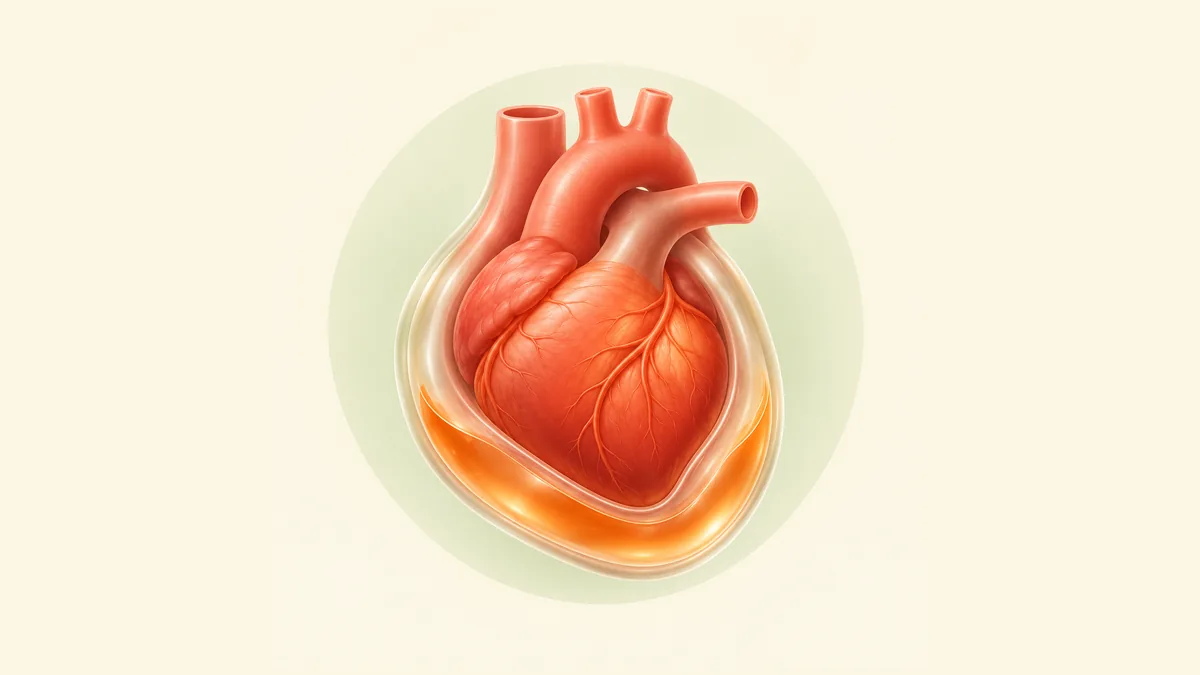
The heart is surrounded by a thin, double-layered sac called the pericardium. A small amount of fluid between its layers helps the heart move smoothly. An abnormal buildup of fluid in this space is called a pericardial effusion. An effusion becomes cardiac tamponade when pressure from the fluid interferes with the heart filling and reduces blood flow to the body. [3]
Cardiac tamponade
Pressure from that fluid impairs filling and circulation. This is an emergency, not simply another name for any effusion.
Some effusions cause few symptoms, especially when fluid accumulates gradually. Doctors assess the effect on heart function rather than relying on the presence of fluid alone. [3]
Which symptoms need urgent attention?
Possible symptoms include breathing difficulty, chest discomfort, lightheadedness, fainting, weakness or a fast heartbeat. They are not specific enough to diagnose tamponade at home. [1]
When pressure prevents the heart from filling properly, less blood may reach the body and brain. This can cause lightheadedness or fainting. These symptoms have several possible causes and do not prove that someone has tamponade, but unexplained fainting or severe or worsening breathlessness needs urgent medical assessment. [1]
Seek emergency assessment for severe or worsening breathlessness, persistent chest pain or unexplained fainting. A person does not need to have every symptom before getting help. [3]
Why can fluid collect around the heart?
Potential causes include inflammation or infection, injury, recent heart surgery or procedures, kidney failure, some cancers and autoimmune conditions. Sometimes the cause is not immediately clear. The treating team investigates the reason as part of care. [3]
How do doctors diagnose tamponade?
Emergency clinicians assess symptoms, blood pressure, circulation and examination findings, with cardiology input as needed. Echocardiography uses ultrasound to show fluid around the heart and assess whether it is affecting heart filling. It can be performed at the bedside, and its findings are interpreted alongside the person’s clinical condition. [1]
An ECG records the heart’s electrical activity. It may show changes that raise suspicion, but it cannot confirm or exclude cardiac tamponade on its own. Echocardiography is the main initial imaging test when tamponade is suspected. Do not delay emergency assessment while arranging a routine outpatient ECG or scan. [1] [4]
What happens in hospital?
Treatment aims to relieve pressure on the heart and support circulation. Pericardiocentesis is a hospital procedure in which a trained clinician uses a needle and usually a small catheter, guided by imaging, to drain fluid from the pericardial space. Removing the fluid reduces the pressure and helps the heart fill more effectively. [2]
The urgency and drainage method depend on the person’s condition and the cause. An unstable patient needs drainage without delay. Some situations require surgery instead of needle drainage. Emergency clinicians, cardiologists and, when needed, cardiac surgeons coordinate care; the underlying cause also needs treatment. [2] [4]
01. Urgent assessment
The team evaluates circulation and the effect of the fluid.
02. Relieve pressure
The treating team selects the appropriate drainage approach.
03. Plan ongoing care
Investigate the cause and arrange monitoring after stabilisation.
After discharge, ask about follow-up, repeat imaging and symptoms that should prompt a return to hospital. Recovery and recurrence risk depend on the cause and response to treatment. [2]
Your questions, answered
How is tamponade diagnosed?
Diagnosis combines clinical assessment with imaging, particularly an echocardiogram. Clinicians look at whether fluid around the heart is impairing filling and circulation; symptoms alone cannot confirm it. [1]
What can an echocardiogram show?
An echocardiogram can show fluid around the heart and signs of pressure affecting the chambers. The findings are interpreted alongside the person’s clinical condition. [2]
Is every pericardial effusion tamponade?
No. Effusion describes fluid accumulation. Tamponade describes its harmful pressure effect on heart function. An effusion can exist without tamponade, but it needs assessment and an appropriate follow-up plan. [3]
Can tamponade be treated with medicines at home?
No. Suspected tamponade needs emergency hospital care. Treatment may require drainage to relieve pressure. Medicines for an underlying cause do not replace urgent assessment. [2]
Can it happen again after treatment?
It can recur. Follow-up depends on the cause, treatment and subsequent findings. Ask the hospital team which symptoms to watch for and when repeat assessment or imaging is needed. [2]
Related Heartwise care
- How 2D echocardiography works
- Understanding chest pain
- Emergency cardiac care
- 2026 ESC heart failure guidelines explained
Sources and further reading
- MedlinePlus — Cardiac tamponade
- Cleveland Clinic — Cardiac tamponade
- Mayo Clinic — Pericardial effusion
- European Society of Cardiology — 2025 Guidelines for the management of myocarditis and pericarditis
Sources checked 9 November 2026.